
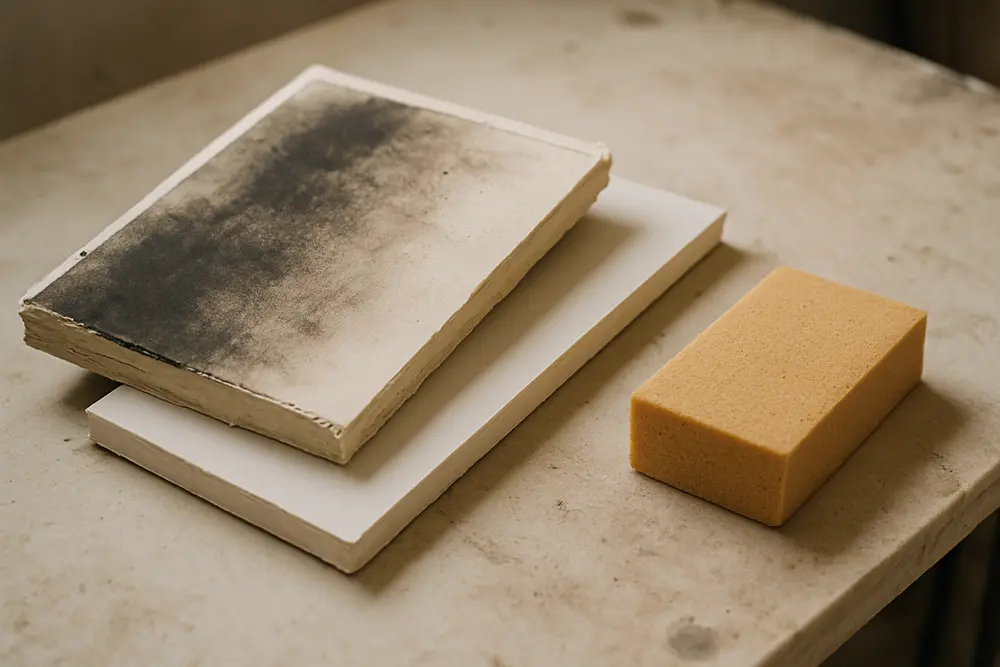
When you look at a smoky wall, you may want every sheet torn out or a coat of primer rolled over the whole room by Friday. The smoke damaged drywall cleaning vs replacement choice deserves a closer look because visible staining tells you only part of the story.
A dark wall across the room may have loose surface soot that cleans well. A lightly stained wall beside the fire may have scorched paper or a brittle gypsum core. The color you see won’t settle the question.
Drywall is a specific building material with a gypsum core enclosed by paper facing. Its condition depends on the heat it absorbed and how deeply residue traveled. Firefighting water can create a separate problem in your home, especially when moisture remains trapped behind the board.
Your decision should come from the condition of each wall and ceiling section. Proper fire damage restoration evaluates the surface and the concealed cavity before anyone starts cleaning or cutting.
How Exposure Changes Drywall
The gypsum core inside drywall contains chemically combined water that contributes to the material’s fire resistance. Sustained heat drives that water out. Severe exposure can leave your drywall chalky or brittle even if flames never burned a visible hole through the panel.
The paper facing can show you some of the earliest signs of serious damage. Blistered facing or separation from the core is a strong reason to remove the affected section. Cracks near the fire deserve your attention when they don’t resemble ordinary settlement cracks elsewhere in your home.
Firefighting water can change what you need to evaluate after a fire. A wet panel may soften or sag between fasteners. Surface drying doesn’t prove that the back paper or nearby insulation is dry, which is why you have to consider post-fire moisture along with heat exposure.
Cleaning vs. Replacement
A smoke-damaged drywall cleaning vs. replacement decision becomes clearer when you compare the material conditions directly. No single row decides every case, but several replacement signs in the same area should make you question the value of repeated cleaning.
| Factor | Cleaning May Work | Replacement Is More Likely |
|---|---|---|
| Heat exposure | Your board is firm and free of scorching | The facing is blistered or the core feels brittle |
| Residue depth | Soot rests on an intact painted finish | Residue entered torn paper or cut edges |
| Residue type | Loose dry particles respond to controlled removal | Oily residue smears or remains absorbed |
| Odor | Odor drops after cleaning and drying | Odor remains in the board or returns later |
| Surface condition | Paint and paper remain firmly bonded | The surface is soft or gouged |
| Moisture | The panel is dry and dimensionally stable | The panel is sagging or delaminated |
| Concealed areas | The cavity and back face are unaffected | Smoke or water reached the backside paper |
| Fire-rated assembly | The tested assembly remains intact | Board or required fasteners are compromised |
Although cost matters, you should consider it only after the scope is accurate. Cleaning a sound painted wall can save you from needless demolition. Paying for repeated cleaning on porous, heat-damaged drywall is false economy, especially when your wall eventually has to come out anyway.
When Cleaning Makes Sense
Cleaning is most defensible when you have soot sitting on an intact painted surface outside the high-heat area. The panel should remain hard and securely attached. Its paper shouldn’t blister or separate during a small test cleaning.
A controlled test area tells you more than a sales pitch about a miracle sponge or coating. Your restoration team should remove loose particles first with suitable HEPA-filtered equipment. They can then test the surface with a dry-cleaning sponge or a compatible cleaner selected for that residue.
Painted drywall usually gives you better odds because an intact coating slows absorption. Unpainted board behaves differently. Torn facing and raw cut edges give smoky residue porous paths below the cleanable surface.
You should expect the odor to improve after the whole source is addressed. Cleaning your wall face won’t accomplish much if smoky insulation remains behind it or residue is still moving through an HVAC pathway. The IICRC fire and smoke restoration standard supports a systematic process built around inspection and source removal.
When to Replace Drywall After a Fire
The question of when to replace drywall after fire exposure starts with the amount of heat your wall received. Direct flame contact is a clear concern, but visible charring isn’t required. A powdery core or delaminated paper means the board can no longer be trusted to perform as intended.
Smoke can travel into your wall through electrical boxes and gaps around pipes. It may reach the backside paper while the room-facing surface looks surprisingly mild. Removing the board may be necessary to reach smoky insulation or inspect damaged wiring inside the cavity.
When hose water leaves your ceiling sagging, removal is usually the practical answer. The board won’t become reliable just because its visible surface eventually feels dry. Where significant moisture reached the assembly, professional water damage repair should account for the board and the materials behind it.
Primer Has a Limited Job
You need to treat primer as a finishing product, not a cleaning method. An appropriate restoration coating may control a residual stain or odor after the surface has been properly cleaned. Applying it directly over contamination can cause poor adhesion and allow odor to return when your room warms up.
A coating can’t restore scorched paper or strengthen deteriorated gypsum. It won’t fix wet insulation behind your wall. If someone proposes priming every smoky surface without testing the board or checking cavities, you’re being offered a fast cosmetic answer to a material problem.
Concealed Damage Changes the Scope
A clean-looking wall in your home can hide smoke on its back face. Electrical outlets and plumbing penetrations give airborne particles a path into the cavity. Open chases above cabinets can spread residue well beyond the room where the fire started.
We start with the fire location and the likely smoke path through your home. Odor around an outlet or residue near a ceiling opening may justify closer access. A borescope can sometimes give you an initial view through a small opening, though a narrow image can’t prove the entire cavity is clean.
Moisture readings help you identify damp sections after suppression, but one dry reading doesn’t certify a panel as salvageable. The meter may not reveal weakened facing or residue on the back of the board. You still need someone to examine the material’s condition.
Fire-rated walls and ceilings require extra care because their performance belongs to the complete tested assembly. You have to preserve the correct board type and attachment pattern. Fire-resistance system designs depend on joints and protected penetrations, so patching only the ugly spot may fail to restore the intended rating.
Although drywall usually isn’t your home’s primary load-bearing structure, damage still affects how the assembly performs. In this setting, structural integrity means that the board remains attached and any rated membrane remains functional. Framing behind your drywall is a separate structural concern that may require exposure.
What Removal Should Reveal
Removing damaged drywall is only useful if you inspect the newly opened space. You need to evaluate charred framing and remove smoky insulation before clean board closes the cavity. Installing fresh drywall over an untreated odor source is how your room can look finished while still smelling smoky on a humid afternoon.
What to Watch After the Work
If smoke odor returns after the work, pay attention to when it happens. Your room may smell acceptable during cool, dry weather and become smoky again when indoor humidity rises. That pattern often points you toward residue left in a porous material or concealed space.
As you inspect repaired surfaces, watch for brown bleed-through or peeling paint. New sagging or widening cracks can indicate moisture or attachment problems that weren’t fully resolved. Those changes deserve investigation before you let another finish coat hide them.
Check the room again after your air conditioner has cycled through warm weather and after the home has been closed for several hours. Your wall shouldn’t need fragrance to smell clean. If smoke odor returns, find the remaining source before accepting another round of primer as the answer.
References
- You are being redirected… (gypsum.org)
- S700 (iicrc.org)