
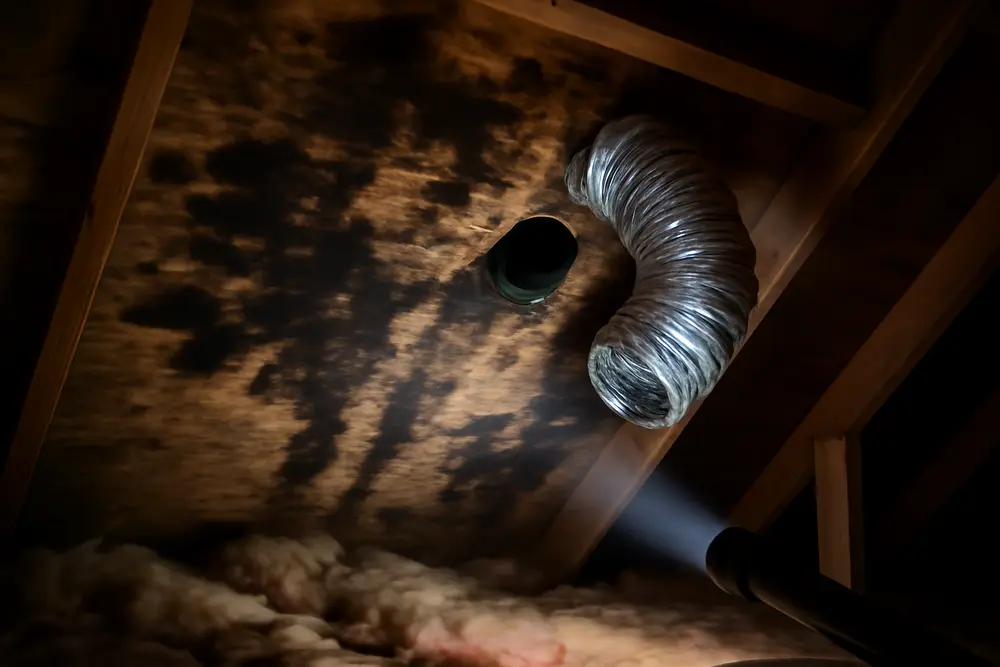
If your bathroom fan is puffing spa air into your attic instead of the great outdoors, you are cooking a petri dish over your head. I have walked into attics where the roof sheathing looks like a Dalmatian, spotted with mold in a perfect circle above the main bath. The culprit was not a roof leak. It was hot shower steam blasting into a cold attic and condensing on wood. If you have roof sheathing mold from bath fans, you can fix it with some smart routing, real insulation on the ducts, a proper bathroom exhaust backdraft damper, and a little attitude adjustment on how you run the fan.
What Is a Mis-Vented Bath Fan?
A mis-vented bath fan is any setup that lets warm, humid bathroom air stall inside your attic instead of discharging outdoors. That includes ducts that end under the insulation, stop short in the attic, dump at the soffit where air can recirculate back inside, or are disconnected altogether. It also includes fans routed with long floppy duct runs that sag and pool water, and fans without a damper that let cold air backfeed and keep the duct cold around the clock.
Think of the duct as a slip-n-slide. If it does not exit the house and it is not insulated and airtight, the warm air slows down, cools off, and the water in it condenses on the nearest cold surface. Your roof sheathing becomes the friendly cold surface and the spores start throwing a block party.
Why Attic Mold Starts With Shower Steam
Showers load the air with moisture. When that air touches a cold surface like wintertime roof sheathing, the moisture jumps out of the air and onto the wood. In colder climates you may even see frost. In milder climates you still get a steady damp film that keeps wood wet long enough for mold to grow. Add wet insulation that has soaked up drip after drip and you have a microclimate that stays damp even when the fan is off. Over time you will see dark staining, fuzzy growth, swollen roof decking, and rusty nail tips that look like they cried orange tears.
Here is how it snowballs. Moist air hits cold sheathing, condenses into water droplets, drips into insulation, and repeats. Insulation loses R-value when it is wet, which makes the attic colder, which causes more condensation. The cycle feeds itself until spring inspection day when you finally poke your head up there and say well that is not good.
Clear Signs You Have Roof Sheathing Mold
Most roof sheathing mold from bath fans leaves a calling card right above the bathroom. You will often find a blotchy or circular patch 2 to 4 feet across where the duct dumps air. The wood may be blotched black, brown, or greenish. Rusted nail tips are common. You might see water marks or even small drip trails down rafters toward the eaves. In winter climates, inspectors sometimes find frost crystals on the underside of the roof deck in the morning that melt by afternoon and vanish until the next cold snap. Inside the living space, bathroom ceilings may show yellowed rings, paint bubbles, or a musty odor that never quite leaves. Mirrors fog and stay fogged way too long. In the attic, insulation right under the problem area can look matted, crunchy, or darker than surrounding batts because it has been repeatedly wet.
One of my favorites was a new build where the fan duct ended three feet short of the gable. The homeowners noticed the trusses near the main bath were turning spotty within a year. The installer thought the wind would carry the humidity out. Instead, it just kept swirling around in the attic like a dryer with no vent hose.
What The Building Code Actually Says
Mechanical exhaust from bathrooms must vent outdoors, not into an attic or crawlspace. Building codes like IRC M1501.1 make that clear. That means your fan needs a continuous duct to an exterior termination with no gaps, no attic stops, and no soffit shenanigans that pull air right back in. Proper venting includes a listed exterior cap or wall vent, a bathroom exhaust backdraft damper, and sealed insulated ductwork that resists condensation. Local codes may also specify minimum exhaust rates, common benchmarks are 50 CFM intermittent or 20 CFM continuous for bathrooms with a tub or shower, or approximately 1 CFM per square foot as a quick sizing check. Always verify the label on the fan and follow the manufacturer’s installation details.
Fix The Duct Routing First
Before you scrub a single inch of wood, correct the vent path. If your fan currently vents into the attic, reroute it to the exterior. You can exit through a roof cap, a gable wall vent, or a properly designed soffit termination that prevents recirculation. Roof caps must be flashed correctly and sealed to the shingles. Wall terminations should be at least several feet from intake vents or windows. Keep the duct run as short and straight as possible. The longer and twistier the run, the more the air cools and slows.
Use smooth-wall metal duct where you can, since it flows better than super-flexy plastic that loves to sag. If you do use flex, keep it pulled tight and supported every few feet so it does not belly and trap water. Slightly pitch the duct toward the exterior termination so any condensation drains out instead of pooling in the attic. A basic target is a gentle slope rather than a roller coaster dip. Every joint needs to be sealed with foil HVAC tape or mastic. Do not use cloth duct tape because it dries out and lets go. Once routed and sealed, insulate the duct to R-6 or higher so the air inside stays warm enough to exit before it condenses. In cold attics this is not optional. It is survival for your roof deck.
Do You Need A Backdraft Damper?
Yes, and you likely need two layers of protection. Most quality bath fans have an internal flap damper near the fan housing. That is good, but you also want a damper at the exterior cap. The exterior damper helps stop wind from pushing cold air backward into the duct and chilling it. A cold duct promotes condensation even when the fan is off. A proper bathroom exhaust backdraft damper also shuts the door on pests looking for a warm shortcut into your house. If your exterior cap does not move freely, clean it and check that the spring and hinge are not stuck. Replace the cap if it is damaged or permanently cocked open.
Vent Settings That Actually Work
The best duct setup still underperforms if you do not run the fan long enough. The fan should run during showers and for at least 10 to 20 minutes after. If you are the set-it-and-forget-it type, add a humidity sensing control or a 30 to 60 minute timer switch. For a bath that doubles as a teenage steam chamber, continuous low-speed ventilation is a hero setting that keeps the room dry without noise complaints. Size the fan to the room. A quick check is roughly 1 CFM per square foot of floor area for standard ceiling heights. Small powder rooms can manage with 50 CFM. Larger bathrooms with jetted tubs, multiple heads, or stacked tile surfaces need more. An undersized fan is a noise machine that moves almost no air, which is how you end up with moldy sheathing and grumpy painters.
Safe Attic Mold Remediation
After you have fixed the venting, deal with the mold. Do not flip the order. If the source still dumps steam in the attic, the mold will return like a boomerang. Suit up with gloves, eye protection, and at least an N95 respirator. A P100 and a disposable suit are even better, because attics are dusty and insulation is itchy. Create basic containment at the attic hatch to keep debris from falling into the hallway. Run a fan in a window at the far end of the house if possible to pull air away from living areas. If you have a whole-home return in the hallway, switch off the HVAC during work.
Pull out any insulation that is visibly wet or moldy in the affected zone. Bag it and get it out. Vacuum wood surfaces with a HEPA vac. Scrub the sheathing and framing with a detergent solution and stiff brush, then wipe clean. Mold removers help, but do not count on bleach to penetrate wood. The goal is to remove the growth and the staining as much as practical. For stubborn staining, sanding or media blasting is an option, but that is pro territory. Dry the area with airflow and dehumidification. We use moisture meters to confirm the wood is back to a safe range before new insulation is installed. If the roof decking is soft, structurally compromised, or deeply deteriorated, that is a repair for a qualified contractor or roofer. Reinstall insulation only after the attic is dry and the duct fix is proven.
What About Soffit Venting?
Venting a bathroom fan to a soffit sounds clever until you realize many soffits pull air back into the attic. Your fan can end up caught in a loop where steam leaves the duct, gets sucked into the soffit intake, and lands right back on your roof deck. If a soffit termination is the only viable path, use a soffit vent that shoots exhaust outward with a damper and confirm it is not near intake vents. In most cases, a roof cap or gable wall termination is the cleaner and safer plan.
How Much Does Fixing This Cost?
Rerouting a single mis-vented fan usually costs less than repairing an attic full of mold and ruined insulation. Expect a few hundred dollars at the low end for a short wall termination with easy access, up to around a thousand or a bit more for a new roof penetration, long or complex duct routes, or high roof work that needs extra safety setup. Replacing a moldy patch of insulation is small potatoes. Remediating an attic with widespread roof sheathing mold, sanding or treating the deck, and resetting insulation can climb fast. Ignoring the issue risks wood rot, sagging roof deck, paint failures below, and indoor air quality problems that make sinuses and asthma unhappy. Early correction is the budget move.
Real World Examples
Case one. A 90s ranch with two baths on one fan, a Y connection, and a duct that ended under the ridge. The homeowner kept wondering why the north slope had dark blotches while the south slope looked normal. Steam was pooling under the ridge and condensing on the colder north side. We split the baths onto separate fans, installed a roof cap for each, insulated both ducts to R-8, and added a timer. The blotches stopped growing and testing showed dry wood two weeks later.
Case two. New flip with a flex duct jogging twenty feet with three tight bends to a gable. The fan was a whisper model that could not push through the spaghetti run. The attic smelled like a locker room. We swapped in smooth-wall duct for most of the run, shortened it by 6 feet, straightened the path, and added an exterior cap with a damper. The fan finally moved air, and the mirror fog cleared in minutes.
Case three. Master bath vented to a soffit right next to an intake. In winter, frost formed on the deck directly above the bath. We moved the termination to the roof, sealed the old opening, and insulated the duct. The frost vanished and the homeowner stopped scraping mold with a kitchen sponge, which was never a good plan.
Common Installation Mistakes
We see the same slip-ups over and over. Flex duct looped like a hammock that holds water. Joints sealed with cloth tape that let go in the first hot summer. No bathroom exhaust backdraft damper at the exterior cap. Ducts that run under the attic insulation where they stay cold and sweat constantly. Terminations buried under new blown-in insulation during an energy upgrade. Fan housings so caked with lint and dust that the rated CFM is a fantasy. Each one chips away at performance until the wood starts growing a beard.
DIY Or Call A Pro?
If you can safely access your attic, know how to work on a ladder, and have basic HVAC sealing skills, rerouting a short duct to a wall cap is a realistic DIY. Roof penetrations, long routes with tricky turns, and anything that needs flashing through shingles is better in pro hands. For mold, a small area under 10 square feet that is light to moderate can be a careful homeowner job if you set up basic containment and follow safe cleaning methods. Larger areas, heavy staining that returns after cleaning, wood that is soft, or any work near electrical or complex framing should go to a restoration crew that can bring HEPA filtration, negative air, and moisture verification. And if you are sneezing before you even open the attic hatch, outsource it. Your lungs are not tool belts.
Best Practices That Keep Attics Dry
Keep your duct short, straight, and insulated. Seal every joint with foil tape or mastic. Use a listed exterior cap with a working damper. Pitch the duct toward the exterior so any condensation leaves the house. Size the fan for the room and actually run it long enough to do its job. Clean the fan grille at least twice a year because a lint blanket kills airflow. Check your attic at least once a year or after a cold snap. If you see dark spotting on roof sheathing near a bathroom, rusty nail tips, or matted insulation, do not wait for spring cleaning. Fix the source and clean the mess now.
Frequently Asked Questions
Can I vent a bathroom fan into the attic if the attic is vented?
No. Even a well-vented attic is not an exhaust destination. Codes require bathroom exhaust to discharge outdoors. Venting into the attic creates an indoor rain cloud over your roof sheathing.
Is venting to a soffit okay?
It is risky because many soffits feed intake vents that pull the exhaust right back inside. If you must use a soffit termination, use a design that shoots exhaust outward with a damper and keep it away from intake vents. Most of the time, a roof or gable termination is better.
What size fan do I need?
A quick rule is about 1 CFM per square foot for average ceilings. Code and best practice often call for at least 50 CFM intermittent or 20 CFM continuous for a bathroom with a shower. High humidity spaces need more airflow.
Do I need insulated duct if I live in a warm climate?
Yes. Nighttime and seasonal changes still make attics cooler than bathroom air. Insulation helps prevent condensation inside the duct and keeps the exhaust warm enough to leave the house.
How long should I run the fan?
Run it during the shower and at least 10 to 20 minutes after. A humidity sensor or timer switch automates this so you do not forget.
Will mold go away once I fix the duct?
The moisture problem will stop, but existing mold needs to be physically removed or cleaned. Otherwise you are just leaving stains and spores behind.
Bleach or no bleach on attic wood?
Bleach does not penetrate wood well and can create fumes in tight spaces. A detergent scrub and HEPA vacuuming are standard. Specialized cleaners and sealers exist, but the key is removing growth and drying the wood.
What is the bathroom exhaust backdraft damper for?
It is a flap that closes when the fan is off to block outdoor air and pests. It keeps the duct from turning into a cold-air straw that promotes condensation. Many fans have an internal damper, but you also want a damper at the exterior cap.
How do I know if my fan is actually moving air?
Hold a tissue to the grille. If it barely clings or flutters weakly, the fan may be undersized, the duct may be kinked, or the grille is clogged with dust. Clean the grille and check the duct for kinks and long runs. If the fan is old and loud but weak, it is time to upgrade.
What To Do Today
Pop the attic hatch and look above the bathrooms. If you see dark patches, rusty nail tips, or a duct ending in the middle of nowhere, you found your problem. Trace the duct to its exit. If it does not go outside, plan a reroute with sealed, insulated duct and an exterior cap with a damper. Install a timer or humidity control so the fan runs long enough to work. Then clean and dry the affected attic area the right way. Your roof sheathing will thank you and your bathroom will stop pretending it is a sauna for the attic above.