
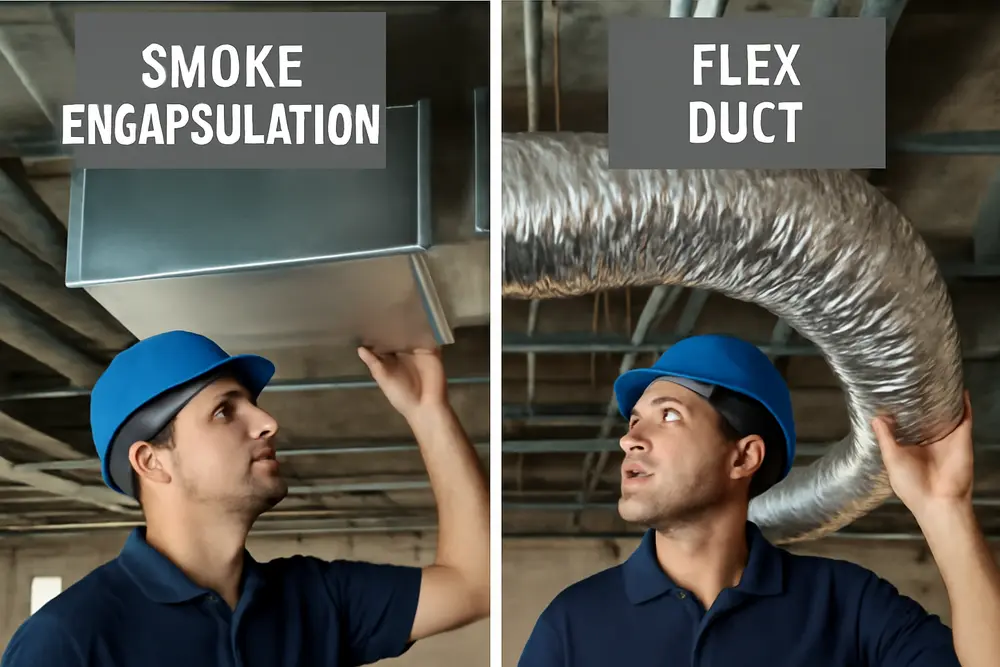
You already changed the filters. You ran the system on fan only. You sprayed every internet-famous odor spray known to humankind. Yet the house still smells like a campfire got into a fight with a hair dryer. Time to make the call on your HVAC. Do you clean and coat the metal or do you pull the flex and lined duct and start fresh? Here is how pros sort it fast and get you back to clean air without throwing money at the wrong fix.
What Kind Of Smoke Hit Your System?
Not all smoke is created equal. Dry soot from paper and wood tends to be powdery and easier to vacuum off metal. Wet or synthetic smoke from plastics and rubber turns sticky and acidic, clinging to everything it kisses. Protein smoke from kitchens is the silent assassin. It looks almost invisible yet smells like a burned microwave dinner forever. The gnarlier and oilier the residue, the more likely it is to embed in porous duct materials and the more likely you need replacement instead of wishful cleaning.
Quick Checks Before You Spend
Start with eyes and nose. Pop a couple of supply registers and look for gray or black film on the inner walls. Open the air handler panel and check the blower wheel, coil face, and insulation. If you see soot tracks on the coil or streaks in the blower housing, contamination rode the airflow hard. Run the system for five minutes. If odor returns quickly after a filter swap and surface wipe-down, the smell is living in the ducts or insulation, not just the cabinet.
Know your materials. Rigid sheet metal is non-porous and usually cleanable with proper equipment and then sealed with a coating. Flex duct has a plastic inner liner with corrugations plus insulation that acts like a sponge for smoke. Lined duct and duct board are fiberglass-based and also porous. If the outer jacket of flex is melted or brittle, or if the inner liner is torn or stained, cleaning becomes a coin toss that usually lands on replace. Add water from firefighting to the mix and fibers can mat, trap soot deeper, and grow things you do not want to inhale.
Can You Just Clean Metal Ducts?
Often yes. With light to moderate soot on intact sheet metal, the playbook is straightforward. Create negative pressure, agitate and brush, and HEPA vacuum until wipes come back clean. Clean coils and the blower assembly with the right degreaser so you do not etch the aluminum. Neutralize odor on surfaces that will not be coated, then apply a purpose-built HVAC encapsulant to the interior of the metal runs and plenums. Look for Class A rated products that meet ASTM E-84 or UL 723 and include antimicrobial protection. That coating locks down microscopic residue and stops off-gassing that fuels lingering odor.
Here is a real-world contrast. A small bedroom candle flare-up that dusted the first few feet of supply trunks usually cleans up nicely and responds to smoke residue encapsulation. A plastic trash fire in the garage that filled the return with sticky soot will not be so kind and needs a deeper intervention.
Smoke Residue Encapsulation Rules
Encapsulation is not spray-and-pray. If you skip real cleaning and just paint over soot, you are building a scented time capsule. The surface has to be mechanically cleaned and dry first. The coating needs to be designed for HVAC interiors, not a random primer from the paint aisle. Application must be even and continuous across seams, tie-ins, and transitions. Put it on too thin and odor laughs at you later. Put it on too thick and you risk flaking. Follow cure times before running the system on heat.
Encapsulation is only for non-porous interiors. It will not turn flex or fiberglass into metal. If your lined plenum or duct board smells when warmed, a coating will not unwind that. You are chasing ghosts with a wallet.
Flex And Lined Ducts Clean Or Replace?
Flex and lined duct have three strikes after a fire. They are porous, they hold odor, and cleaning can damage them. The inner liner corrugations trap soot. The insulation behind the liner locks in that smoky bouquet. Even if you reduce surface residue, run the heat for ten minutes and the smell often returns. That is why flex duct replacement is the standard move when there is moderate to heavy smoke exposure. Same for duct board and lined plenums that show residue or produce odor under heat.
Age matters too. If your flex is past the ten-to-fifteen year mark, it has already lost some integrity. Add smoke and maybe water from suppression and the odds of a successful clean drop fast. Replacing flex in these cases usually costs the same or less than a couple rounds of cleaning, deodorizing, and callbacks.
Example time. We inspected a hallway return with a slightly melted vapor barrier and a burnt plastic odor that punched you in the face when the furnace fired. Cleaning the air handler helped, but the smell kept coming back on heat. We replaced the return flex, a short lined section at the plenum, and a few supply runs. Odor gone on the first test.
What About The Air Handler?
Metal can be cleaned. Electronics that inhaled corrosive smoke may not forgive you. We disassemble and clean the blower wheel and cabinet, treat and rinse the coil, and address internal insulation. If there is a persistent odor from the cabinet liner, we replace that liner instead of trying to perfume it. Motors and control boards that show corrosion or that were cooked by heat exposure often get swapped. After restoration, we up the filtration to MERV 11 to 13 for a short run-in period to catch stragglers, then return to what your system is designed to handle.
Cost Checks That Keep You Sane
Cleaning and coating metal runs is usually a smart spend when the ducts are sound. Trying to clean flex or duct board repeatedly is not. Material cost for new flex is usually friendly and install time is short. Each repeat visit for odor complaints eats the budget and your patience. Clean metal where you can and put replacement dollars into the porous pieces. Bonus points for efficiency. New, properly sized flex with smooth inner walls and tight connections reduces static pressure and gets you better airflow than old kinked lines that have seen things.
Decision Cheat Sheet
| Scenario | Material | Smoke Level | Condition | Action |
|---|---|---|---|---|
| Light soot after minor fire | Sheet metal | Low to moderate | No heat damage and no odor after warm-up | Clean plus smoke residue encapsulation |
| Persistent odor on heat | Flex or lined duct | Moderate | Intact or slightly damaged jacket | Flex duct replacement and replace lined sections |
| Sticky soot from plastics | Mixed system | Moderate to heavy | Soot on coil and blower | Clean cabinet and metal plus replace flex and duct board |
| Char or melting visible | Any | Severe | Warped metal or melted insulation | Replace damaged components or runs |
How We Test And Decide
We start with register pulls and cabinet inspection, then run the system to warm and sniff. We use white-wipe tests on duct interiors and coils to see what is coming off. If needed, we collect tape lifts to confirm soot and check for fiberglass shedding when lined sections are suspect. We photograph everything so you can see what we see. Then we map a plan that keeps cleanable metal in play with smoke residue encapsulation and targets flex duct replacement or lined duct removal where odor would otherwise haunt you later.
Our Process In Central Texas
At Austin Hi-Tech Restoration we clean, coat, and replace HVAC components after fires across Central Texas every week. We pair field restoration with our smoke cleaning facility so contents and system work stay on one timeline. We use HVAC-approved Class A encapsulants, HEPA-source removal, and real deodorization methods like hydroxyl treatment. No gimmicks. If flex or duct board will keep stinking up your house, we recommend replacement, size and hang it right, seal connections, and document it for your adjuster.
FAQs
Can I encapsulate flex duct and call it good?
That is a no. Flex is porous. Coatings will not reach or lock down residue inside the insulation. If flex smells after smoke exposure, replace it.
Will ozone clear smoke odor in my ducts?
Ozone can damage rubber and some plastics and it does not fix soot embedded in porous duct materials. We use safer deodorization and address the source, not just the smell.
How do I know if my lined plenum is a problem?
Warm the system and check odor at the closest supply registers. If odor spikes quickly and the metal trunks test clean, the lined plenum is suspect. A cut-and-check or tape-lift sample often confirms it.
Can UV lights or ionizers solve smoke odor?
They are not a substitute for source removal. UV targets microbial growth, not bonded smoke films. Ionizers change particle charge, not what is stuck inside fiberglass.
What if my insurer wants cleaning only?
We document material type, age, wipe results, odor on heat, and any heat or water damage. When the evidence shows porous materials will not respond, replacement is the cost-effective path and we help make that case.
How long does restoration take?
Most residential projects run one to three days for cleaning and coating of metal plus another day for flex duct replacement. Larger homes or heavy contamination push longer. We schedule to get you breathing easier fast.
Do I need to leave during the work?
For heavy cleaning and coating, we recommend you step out during the messier phases. We ventilate, filter, and verify no lingering odors before handoff.