
Plenty of homeowners assume mold remediation ends when the damaged drywall comes down. Demolition can expose the problem, but it doesn’t prove the water problem is resolved.
The best time to judge the work is after the area has been cleaned but before it’s covered. Once reconstruction hides the area, unanswered questions become expensive questions.
A practical mold remediation clearance checklist should give you evidence, not vague assurances that everything “looks good.” You want records confirming that the completed work matches the written scope.
Post-remediation verification is the inspection process used to evaluate the completed cleanup. Clearance is the successful result after the established criteria are met. Closeout is the broader handoff of project documentation.
You should review that information before authorizing reconstruction or releasing a remediation milestone payment required by your contract. Fresh drywall is a poor substitute for proof.
Use This Mold Remediation Clearance Checklist
Walk through these items while the remediated surfaces remain accessible. A failed item doesn’t always mean the entire project was handled badly, but it does mean reconstruction should pause until you receive a clear explanation or corrective work.
- The moisture source was corrected. You have written confirmation showing what stopped the water intrusion.
- Remaining materials are dry. Moisture readings identify the tested material and its location.
- The work area is visibly clean. Exposed surfaces have no visible growth or loose residue.
- Damaged porous materials are gone. Water-damaged porous material hasn’t been left inside the cavity.
- No unexplained odor remains. A persistent musty smell has been investigated before the area is covered.
- The work matches the written scope. Required removal and cleaning were completed, with any changes documented.
- Verification requirements were met. The appropriate evaluator inspected the work under the criteria established for the project.
- You received the closeout records. The package includes moisture documentation and the applicable clearance report.
Don’t treat one checked box as proof that everything passed. A dry stud doesn’t excuse visible debris, and a clean cavity doesn’t fix an active roof leak. The pieces have to agree.
Fix the Water Source and Prove Dryness
Mold cleanup won’t hold if water can return. The EPA guidance on mold and moisture connects successful cleanup with correcting the underlying moisture problem, which sounds obvious until a reconstruction crew is waiting and everybody wants the wall closed.
A leaking supply line offers a straightforward example. You should be able to confirm that the failed fitting was repaired and that the surrounding materials were dried. If the original cause was an exterior leak, checking after rainfall may reveal more than looking at the cavity on a sunny afternoon.
The remediation contractor may not have been hired to repair your roof or plumbing. That division of work is normal. It doesn’t make an unresolved leak safe to cover, and you may need a qualified trade or water damage repair service in Austin to address the source and document the drying work.
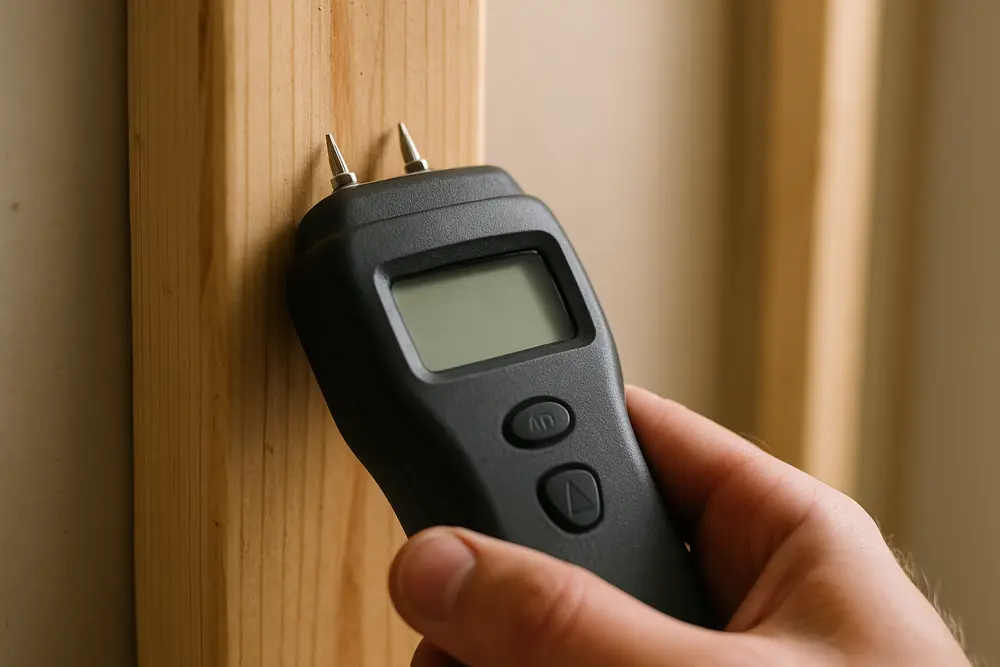
Ask for moisture readings instead of accepting “it feels dry.” A useful record identifies the material tested and the location of each reading. It should also state the meter used and the target applied. Readings from comparable unaffected materials can provide helpful context.
There isn’t one universal moisture percentage that proves every building material is ready. Meter type and material affect the result. A surface can feel dry while sheathing deeper in the assembly remains damp, so a contractor waving a meter near one accessible stud isn’t much of a drying report.
Inspect Before the Work Is Covered
Your inspection should include every area named in the remediation scope. Inspect every open cavity, especially where demolition stopped. Dust piled on a sill plate matters because reconstruction can spread that residue beyond the work area.
Visible discoloration needs evaluation, but color alone doesn’t prove active mold remains. Some staining can persist after proper cleaning. The responsible response is to assess and document the stain before covering it.
| Checkpoint | Ready for Reconstruction | Reason to Pause |
|---|---|---|
| Framing | Dry readings and clean surfaces | Visible growth or unexplained dampness |
| Wall cavity | No loose residue or demolition debris | Dust buildup or damaged porous material remains |
| Subfloor | Stable surface with documented dry readings | Swelling or continuing moisture |
| Odor | No persistent musty odor in the work area | Odor remains without investigation |
| Scope | Completed work matches the written plan | Undocumented changes or missed locations |
A before-and-after comparison can be revealing. Before remediation, the cavity may contain damaged drywall paper and dusty framing. Afterward, the specified porous material should be removed and the retained surfaces should be clean enough for a proper inspection. New paint or encapsulant shouldn’t be used to make debris harder to see.
Musty odor is another reason to stop, though the absence of odor isn’t a clearance test by itself. Odor may point to hidden damp material or an area outside the original demolition boundary. It deserves investigation while access is easy.
What Does Proper Verification Include?
Post-remediation verification begins with a detailed visual assessment and moisture evaluation. The evaluator should compare the completed work with the remediation protocol or written scope, using criteria established before cleanup was finished.
The original plan matters because “clean enough” is too easy to redefine after the work. If the scope required removal two feet beyond visible damage, you should be able to see that the removal occurred. If hidden damage required a larger work area, the change should appear in writing.
Air Testing Has a Limited Role
Air sampling isn’t automatically required for every mold project. The EPA explains that mold sampling is often unnecessary when visible growth has been addressed and the moisture problem has been corrected. No federal mold or spore limit acts as a universal passing score.
When sampling is required by the protocol or applicable rules, the report should explain where samples were taken and what criteria were used. One passing air sample can’t prove every concealed surface is clean. Promises of a “zero mold” home are another red flag because mold spores naturally occur indoors and outdoors.
Texas Projects May Require Formal Clearance
Texas regulates mold assessment and remediation, though thresholds and exemptions mean every small residential project isn’t handled identically. The Texas Department of Licensing and Regulation mold program provides current information about licensing and required project documents.
For regulated work, ask whether a licensed mold assessment consultant must complete the post-remediation assessment. Texas rules separate assessment from remediation in applicable projects to reduce conflicts of interest. A remediation contractor simply announcing that the job passed may not satisfy the project requirements.
Your closeout package should contain the final work scope and the records required by the original protocol. For a regulated Texas project, request the applicable assessment and certificate documents before reconstruction starts.
When to Inspect It Yourself or Get Help
You can handle the first review yourself when the work is accessible and the written scope doesn’t require an independent clearance professional. Use the checklist to compare the open area with the written scope. Don’t approve work you can’t see or documentation you can’t understand.
Bring in qualified help when the water source is uncertain or Texas regulations apply. You should also stop when visible residue remains or the contractor relies on a single air sample as the entire inspection. Those aren’t minor paperwork issues.
At Austin Hi-Tech Restoration, we expect you to ask how dryness and cleanup quality were confirmed. If your wall cavities are still open and you can’t get a direct answer, use our contact page to request a professional project review before reconstruction. The quick decision is simple. Inspect it yourself when the evidence is complete and the criteria are clear. Get help when either one is missing.
References
- A Brief Guide to Mold, Moisture and Your Home (epa.gov)
- Mold Testing or Sampling (epa.gov)
- Mold Assessors and Remediators Homepage (tdlr.texas.gov)