
Getting your water plan wrong can turn a replaceable supply line into serious interior damage. The original failure may be modest. The expensive part is letting pressurized water run for hours or days because nobody is there to close a valve.
Vacant home water damage often becomes severe because the house has lost its fastest safety device, you. A toilet begins refilling nonstop when you’re home, and you hear it. The same toilet can keep cycling through an entire holiday trip when the house is empty.
A pinhole leak behind the refrigerator may first wet a few inches of flooring. Left unnoticed, that moisture can travel under nearby cabinets and into the wall. By the time you receive a high water bill or return home, the visible puddle may be the least interesting part of the problem.
Holiday water leak prevention should connect control of the supply valve with a person who can physically enter the house. A phone alert is useful, but an alert without a response plan is just bad news delivered faster.
The main decision is whether your water will stay on or be shut off while you travel. Make that choice early enough to identify equipment that needs water and fix a valve that won’t operate. Travel morning is a lousy time to discover that your homeowner’s shutoff is corroded solid.
Choose How the Water Will Be Left
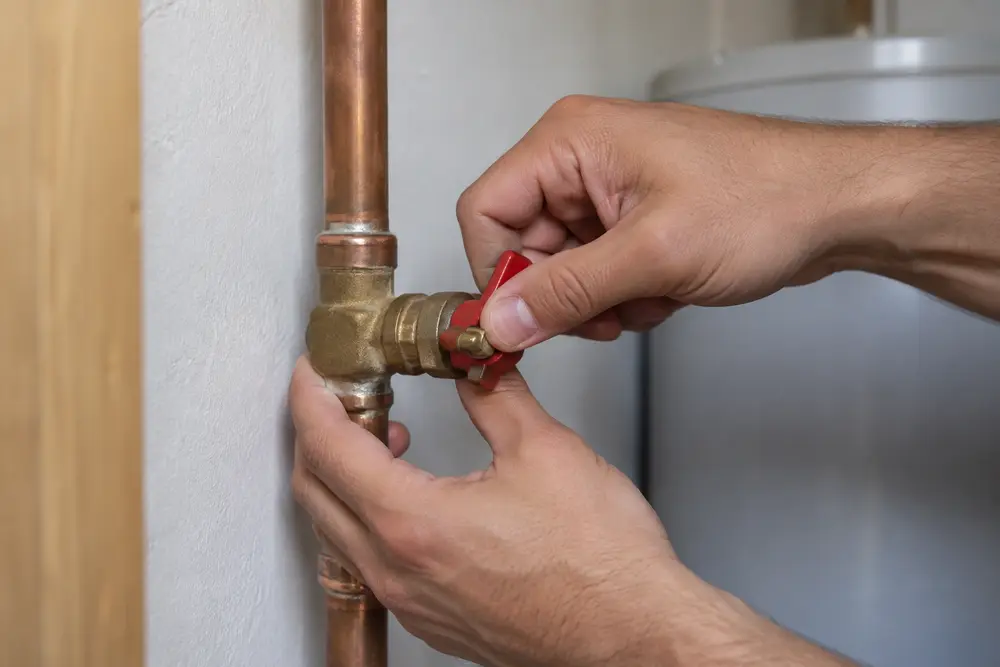
Closing the property-side main shutoff can limit additional water feeding a broken indoor supply line. That protection matters when the house will be unattended, but it isn’t appropriate for every plumbing setup. Fire protection or heating equipment may depend on a continuous supply.
When water must remain on during a trip, make sure your property checker knows how to close the main. A washing-machine valve helps with a failed washer hose, but it won’t stop a toilet supply line across the house. Ask a qualified plumber or the equipment provider what can safely lose its water supply before you close the main.
| Decision | Main Benefit | Main Limitation |
|---|---|---|
| Main supply shut off | Limits new pressurized water feeding many indoor plumbing failures | May affect water-dependent equipment and won’t stop every source of damage |
| Main supply left on | Keeps connected equipment operating normally | A failed line can continue flowing until someone closes the supply |
| Appliance valves closed | Reduces exposure at selected fixtures such as the washing machine | Protects only the connections controlled by those valves |
Use One Holiday Travel Checklist
Start working through this checklist several days before your departure. That gives you time to deal with a running toilet or questionable valve without turning packing day into an emergency plumbing experiment.
- Check upcoming conditions. Review the forecast and Austin Water’s current freeze guidance. Local instructions can change with expected conditions.
- Repair existing leaks. Look beneath sinks and around toilets. Inspect appliance connections for leaks or deterioration. Austin Water explains ways to find and fix household leaks, while the EPA identifies common trouble spots in its household leak guidance.
- Inspect the highest-exposure connections. Check washing-machine hoses and refrigerator tubing closely. Look at the water-heater pan and nearby flooring for signs that water has already escaped.
- Prepare outdoor plumbing. Disconnect garden hoses and protect exposed faucets for expected weather. Check irrigation piping separately because it may not be controlled by the indoor shutoff.
- Locate and label your shutoff. Confirm that you’ve found the homeowner’s valve, not utility equipment at the meter. Test it ahead of time, but never force a stuck or corroded valve.
- Identify water-dependent systems. Verify how shutting off water affects fire protection or hydronic heating. Include treatment equipment if you have it.
- Choose whether the main stays open. Base the choice on the home’s systems and weather exposure. If it stays on, strengthen the response plan.
- Follow water-heater instructions. Use the manufacturer’s vacation procedure for your model. Don’t drain a tank or change settings based on generic online advice, especially with an electric element that could be damaged if energized in an empty tank.
- Keep freeze protection operating. Leave the heating system on during cold weather. Test low-temperature alerts before leaving.
- Assign a property checker. Provide reliable access and written instructions. Give that person permission to close the water when a leak is suspected.
- Review your insurance policy. Check for policy conditions that may apply during a longer trip. Policy language and required check schedules vary.
What Can a Closed Valve Still Miss?
A closed main valve doesn’t remove water already held in the plumbing system, so a damaged line may still release that remaining water. The amount is usually more limited than an open pressurized supply, but limited doesn’t mean harmless when water reaches wood flooring or a ceiling below. Your indoor shutoff won’t prevent roof leaks, drain backups, or irrigation failures supplied through another connection. Frozen plumbing can create another unpleasant surprise because a pipe may split during a freeze and reveal the failure only when you restore water. Don’t reopen the main and immediately walk away. Watch exposed connections and listen for unexpected flow while pressure returns.
Keep the House Warm During Freezes
Use a Defensible Thermostat Setting
The American Red Cross recommends leaving the heat on and setting the thermostat no lower than 55°F when you’re away during cold weather. Turning the system off to trim the utility bill is a poor trade when plumbing runs through exterior walls.
Maintaining a safe thermostat setting is only one layer of freeze protection. Pipes in a garage or attic may receive little conditioned air. Keep the garage door closed when water lines pass through that space, and open sink-base cabinets when freeze conditions warrant better air circulation around exterior-wall plumbing.
Plan for a Heating Failure
A smart thermostat can report a falling indoor temperature, but it can’t restore power or repair a failed furnace. Monitor winter conditions and arrange a physical visit after a power interruption. Federal winter-weather preparedness guidance also emphasizes planning for outages, which matters when your plumbing protection depends on an operating heating system.
Treat Sensors as Backup
Place Detectors Where Water Will Travel
Leak sensors are useful near a washing machine or water heater because those areas can release substantial water before moisture becomes visible elsewhere. Put the sensor where escaping water is likely to travel. A detector mounted several feet from the appliance may stay perfectly dry while water runs under the flooring in the other direction.
A basic sensor can send an alert, but it can’t close a valve. Someone still needs to receive the notification and take action, which becomes a problem when you’re on a flight or sleeping in another time zone.
Connect Every Alert to a Response
An automatic whole-house shutoff can stop supply flow after detecting unusual use or moisture, depending on the device. That’s stronger protection, but don’t treat the equipment as magical. Power loss or an internet failure may interfere with alerts, and poor sensor placement can delay detection.
Every leak alert needs a response path that works when you’re unreachable. Decide who will receive the notification, how that person will enter the house, and when the main valve should be closed.
Before departure, test every device and confirm which phone receives the alert. Make sure your designated checker receives it too. Buying a sensor and leaving it in the box beside the water heater is preventive theater.
Give Your Property Checker Authority
A vague request to “keep an eye on the house” isn’t a plan. Your checker needs a key or dependable access method, the location of the main shutoff, and clear permission to use it. Provide your contact information and the number for an appropriate plumber.
Physical checks should include the areas beneath sinks and around toilets. The checker should also inspect the water heater and look at ceilings below plumbing. Arrange an additional visit after severe weather. The right schedule depends on trip length and weather, plus any conditions in your insurance policy.
Return Water Carefully
Before reopening a closed supply, walk through the house and look for stains or damp flooring. Pay close attention to pipes along exterior walls if Austin experienced freezing weather while you were gone. Open the valve slowly and remain nearby while the plumbing repressurizes. Listen for running water when no fixture should be using it. Check appliance connections again after flow is restored because a freeze-damaged line may not leak until pressure returns.
If you discover water, stop the source when it’s safe and document visible damage. Wet drywall and flooring can hold moisture beyond the obvious puddle, so prompt water damage repair in Austin may be needed after the plumbing failure is addressed.
Make the Supply Decision Before Travel
The single most useful step for limiting vacant home water damage is deciding, before departure day, exactly how the main supply will be left and who can close it. Confirm that choice works with your home’s equipment, then test the valve while there’s still time to call a plumber. Everything else works better once that decision is settled.
References
- Fix a Leak Week (epa.gov)
- Preventing & Thawing Frozen Pipes (redcross.org)
- Winter Weather (ready.gov)