
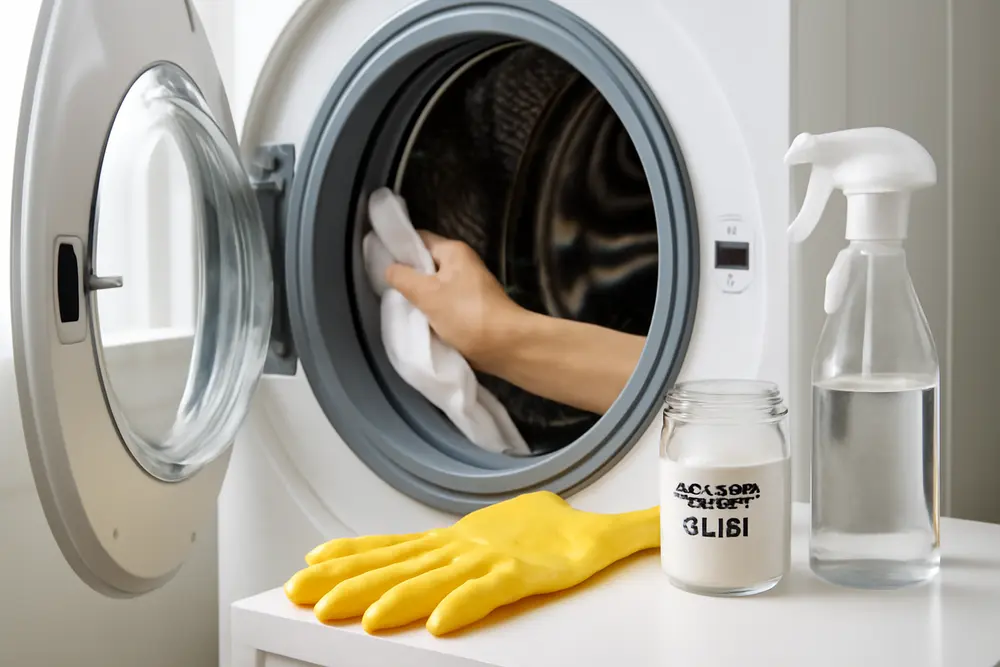
Washer door seal mold removal is not rocket science, but it does take the right moves and a little patience. If your front-loader smells like a high school locker room and the rubber ring looks like a tiny swamp, you are not alone. That flexible ring is called a door gasket or bellow. It keeps water in and unfortunately it also traps grime and moisture. I restore homes for a living and I can tell you mold loves tight, wet, soapy spaces. Here is how to handle front load washer gasket cleaning with methods that actually work, how to keep that mess from coming back, and how to know when it is time to replace the gasket.
What That Rubber Gasket Really Does
The gasket wraps the opening of your front-load washer so water and suds do not spray out during a cycle. It is flexible so the door can compress it and form a watertight seal. That tight seal is great at keeping water inside. It is also great at trapping a little bit of water in the folds and lips of the gasket once the cycle ends. The space between the glass door and the inner lip of the gasket is a low-airflow pocket that stays damp. Add lint, hair, and leftover soap film and you have mold’s idea of a starter home.
Every brand has its own gasket design. Some have a deep lower fold where socks and hair love to hide. Some place the drain holes right under the fold and they plug up with gunk. Either way, the physics is the same. Dampness plus residue plus time equals funk. If you only wash on cold and shut the door tight after every load, you give mold a 24-7 spa day.
Why Mold Loves Washer Door Seals
Mold is not picky. Give it moisture, food, and low airflow and it shows up. Your washer supplies all three. After a cycle, water often pools in the lower folds of the gasket and along the door lip because the seal is tight and air barely moves there. Sources like Organizing.TV explain that the gasket design naturally traps that moisture, which is strike one for mold growth. Detergent and fabric softener rinse agents leave a thin film on the gasket and basket walls. That film is loaded with organics that mold can use as food. Asurion’s tech tips point out that excess soap is a prime culprit, especially in high-efficiency machines where you need much less than you think.
Your environment also matters. If you do lots of cold washes, live in a humid climate, or skip regular clean cycles, you keep that gasket damp and coated. Cold water does not break down residue as well. Infrequent cleaning lets biofilm harden in the folds. A closed-door habit locks in moisture. Pet hair, toddler socks, and coins wedge in the folds and block the little drain notches at the bottom. When those drains clog, a tablespoon of water turns into a permanent puddle.
I regularly see this in homes near the coast or in basements with poor ventilation. The laundry room feels sticky, the door is always closed, and the detergent cup gets filled to the brim. Three months later the gasket has black spotting and the machine smells like a swamp. The fix is not complicated, but it has to be done right so you clean the mold and protect the rubber.
Front Load Washer Gasket Cleaning That Works
Gear up smart. You do not need a hazmat suit, but gloves are wise and a few tools help. A microfiber cloth, a soft brush like an old toothbrush, a nonabrasive mildew cleaner, white vinegar, baking soda, and a small amount of regular household bleach are typically enough. Mr. Appliance and Asurion both outline similar supply lists and steps. Skip abrasive pads that can scuff the rubber and avoid harsh solvents. The gasket is usually EPDM rubber, which is tough but not indestructible.
Start with power and water safety. Turn the washer off and open the door wide. Pull the gasket lip gently toward you to expose the inner folds. You will probably find lint, hair, sand, maybe a forgotten bobby pin, and the occasional Lego. Remove that debris by hand and toss it. Now you can see the real situation.
Use a cleaner that works with your comfort level. For light gray film and a little spotting, spray white vinegar full strength or diluted 50-50 with water onto the gasket and into the folds. Let it sit for 5 to 10 minutes, then scrub the creases with your soft brush. Wipe with a damp microfiber cloth and repeat until the cloth comes away clean. For heavier black spotting, switch to a bleach solution mixed about 1 part household bleach to 10 parts water. Apply it to the worst areas and let it dwell for 5 minutes before gentle scrubbing. Never use vinegar and bleach together. That cocktail makes dangerous fumes, which Asurion warns about repeatedly.
Do not stop at the rubber. Mold often starts in the detergent drawer and then migrates to the door area. Pull the detergent tray out if your model allows it. Soak it in hot water with a little dish soap, scrub out any slime trails, rinse, and reinstall. Wipe the cavity where the drawer slides in too. If the drawer does not come out, swab the area with a bottle brush and a vinegar solution until residue is gone.
Next hit the drum. Run the hottest cycle your machine offers with no laundry inside. Add either 1 cup of liquid chlorine bleach to the bleach dispenser or a measured amount of washing machine cleaner as the manufacturer specifies. Let the machine complete its cycle. If your washer has a Clean Washer or Sanitize cycle, use that. Asurion and Bottom Line Inc both recommend running a monthly clean cycle to flush out hoses, the outer tub, and the gasket pockets where water hides.
If your machine has a serviceable pump filter behind a small door near the floor, put a shallow pan and towels under it, then open the cap slowly. You will probably get a cup or more of stale water. Remove lint, coins, and gunk from the filter and reinstall. A blocked filter contributes to slow draining and standing water in the gasket area.
A Real-World Fix From The Field
A client with a mid-size LG front-loader complained that her laundry smelled sour and the gasket had black freckles. She always shut the washer door and used a full cap of liquid detergent and fabric softener each load. We pulled back the lower gasket fold and found a wad of dog hair plugging a tiny drain slit along with a teaspoon of standing water. The detergent drawer was slimy. We cleared the drain notch with a zip tie, scrubbed the gasket folds with vinegar, treated the darkest specks with a bleach solution, deep cleaned the drawer, and ran a sanitize cycle with a cleaner tablet. We also showed her how to leave the door slightly open and to switch to HE powder measured to the line. Two weeks later, the smell was gone and the spotting had not returned.
Heavy Mold Options That Are Safe
Stubborn mold happens when biofilm has had time to dig in. Use stronger options carefully so you do not damage the gasket. Bleach is highly effective on mold staining. Vinegar softens mineral and soap residue that trap grime. Baking soda adds gentle abrasion and helps neutralize odors. Stick to one chemistry at a time. If you use bleach, rinse and air out the washer before you ever use vinegar. Below is a simple cheat sheet for what to use and when, drawn from field practice and tips from sources like Mr. Appliance and Organizing.TV.
| Cleaner | When To Use | Mix Ratio | Notes |
|---|---|---|---|
| White vinegar | Light to moderate film and odor | 50-100 percent on gasket | Let sit 5-10 minutes, scrub gently, rinse |
| Bleach solution | Heavy black spotting | 1 part bleach to 10 parts water | Ventilate, wear gloves, 5 minute dwell, never mix with vinegar |
| Baking soda paste | Extra scrubbing power | 3 parts soda to 1 part water | Use with vinegar cleaning sessions, not with bleach |
| Washer cleaner tablet | Monthly maintenance | As directed by brand | Run hottest or Clean Washer cycle |
If you are battling a ring of mold that will not lift, spot treat. Pat the area dry, apply the bleach solution to just the dark flecks with a cotton swab, let it sit for 5 minutes, then dab with a damp cloth and rinse. Repeat once or twice. Avoid saturating electrical parts. Keep liquids away from the door lock and control area. When you are done, leave the door open for a few hours to dry the creases fully. A small fan aimed at the opening speeds this up.
Habits That Prevent Mold Regrowth
The best mold control is not hero cleaning once a year. It is small habits that keep moisture moving and residue low. After a wash day, pull back the lower gasket lip and wipe out any beads of water. Run a dry microfiber cloth along the glass door edge and the inner lip. Leave the door ajar so air can flow for several hours. If you have kids or curious pets, use a door prop clip designed for washers or drape a towel over the lip so the door cannot latch fully. Do not park a wet load overnight. That sour smell sets in fast and feeds gasket growth.
Use HE detergent in the right amount. On many bottles, that is not a capful. It is often a line halfway up the cap or less depending on water hardness and load size. Too much soap makes a suds blanket that never fully rinses. That leaves a sticky film that mold can cling to. If you can, switch to HE powder. It typically rinses cleaner than some thick liquid formulas. Go easy on fabric softener. It is basically lotion for your clothes and it leaves a waxy coat on the washer walls. If you like softer towels, reduce the dose and run an extra rinse now and then.
Put the washer on a monthly maintenance schedule. Remove and clean the detergent drawer. Run a Clean Washer or Sanitize cycle with a cleaner tablet or with bleach as your manual allows. Wipe the gasket folds after that cycle because loosened residue can settle there. Check the pump filter every few months or every 30 to 40 wash cycles. That filter traps buttons, sand, and lint that otherwise keep moisture in places it should not be. Sources like Asurion and Bottom Line Inc recommend this cadence for a reason. It works.
Mind the room, not just the machine. If your laundry nook is a steamy closet, moisture lingers. Improve airflow with a small dehumidifier or by cracking a nearby window. Keep the machine level and avoid cramming it tight against the wall, which restricts backside airflow. If you wash lots of athletic gear, run a hot maintenance cycle more frequently. Hotter water helps melt away build-up and knocks mold down a peg.
When To Replace The Gasket
There is a difference between cosmetic staining and a failed gasket. If you can clean the surface mold, the odor fades, and there are no leaks, you are good. But there are clear signs it is time for a new door seal. Cracks and tears anywhere on the gasket are a hard stop. The seal will not keep water in and it will only worsen. If the rubber feels stiff or brittle compared to the rest, it is aging out. If black spotting returns within days of a thorough cleaning and you still smell funk even after running a sanitize cycle, mold may be embedded deep in the rubber. That is tough to fix long term.
Water on the floor at the front of the machine after a cycle is another red flag. Drips at the 6 o’clock position often mean the lower fold is compromised or a drain notch is torn. Replacement is the fix. Most gaskets cost something like 50 to 250 dollars for the part depending on brand and model. Labor ranges widely. Some machines let you do it with the front panel off and a couple of spring clamps. Others require more disassembly. If you are handy, check your model number and watch a few reputable tutorials specific to your washer. If not, hire a pro. The job typically runs 150 to 300 dollars in labor, sometimes more for premium models. Once replaced, stick to the habits above so the fresh gasket stays clean.
If you replace the gasket and still have a sour odor, the issue might be beyond the seal. Biofilm can set up shop in the outer tub, the drain hose, or the pump housing. A deep professional cleaning or part replacement may be needed. That is rare, but I see it in machines that were shut for months with residue inside.
Quick FAQs
Can I use vinegar and bleach together?
No. Never. Mixing them creates dangerous fumes. Use one product at a time and rinse well between different cleaners. Asurion’s tech guide is very clear on this.
How often should I do deep cleaning vs quick wipe-downs?
Do a light wipe and leave the door ajar after every laundry day. Run a Clean Washer or hot sanitize cycle about once a month, or more often if your washer sees daily action. Clean the detergent drawer and pump filter every 30 to 40 cycles.
Is gasket mold dangerous?
For most households it is a nuisance that causes odor and can bother people with allergies. Left unchecked it can slowly degrade the rubber and shorten the life of the seal. Clean it promptly and keep the area dry to prevent growth.
Can I use a Magic Eraser on the gasket?
It is abrasive and can scuff rubber. Use it sparingly if at all. A soft brush and the right cleaner do the job without risking damage.
Which works better for cleaning, powder or liquid detergent?
HE powder often rinses cleaner and leaves less film in many machines. If you prefer liquid, measure carefully and consider an extra rinse for heavy loads. Either way, less is usually better with HE washers.
What if I still smell odor after cleaning the gasket and running a hot cycle?
Check the detergent drawer cavity and the pump filter. Those two spots are common odor hubs. If the smell lingers after a full maintenance run and the gasket looks clean, consider a second hot cycle with a cleaner tablet. Persistent odors can point to buildup in internal hoses, which may require service.
Sources Worth A Look
For additional how-to details and maintenance ideas, these practical guides align with what I see in the field:
Mr. Appliance on cleaning and prevention
Asurion step-by-step cleaning
Organizing.TV on gasket folds and stubborn spots
Bottom Line on monthly maintenance
Front load washer gasket cleaning takes a little elbow grease and a few smart tweaks to your routine. Clear the folds, treat the stains with the right cleaner, run hot maintenance cycles, and keep the door from becoming a sauna. If the rubber is torn or stubbornly stinky, swap it and start fresh. Your washer should smell like clean laundry, not a marsh on a summer afternoon.