
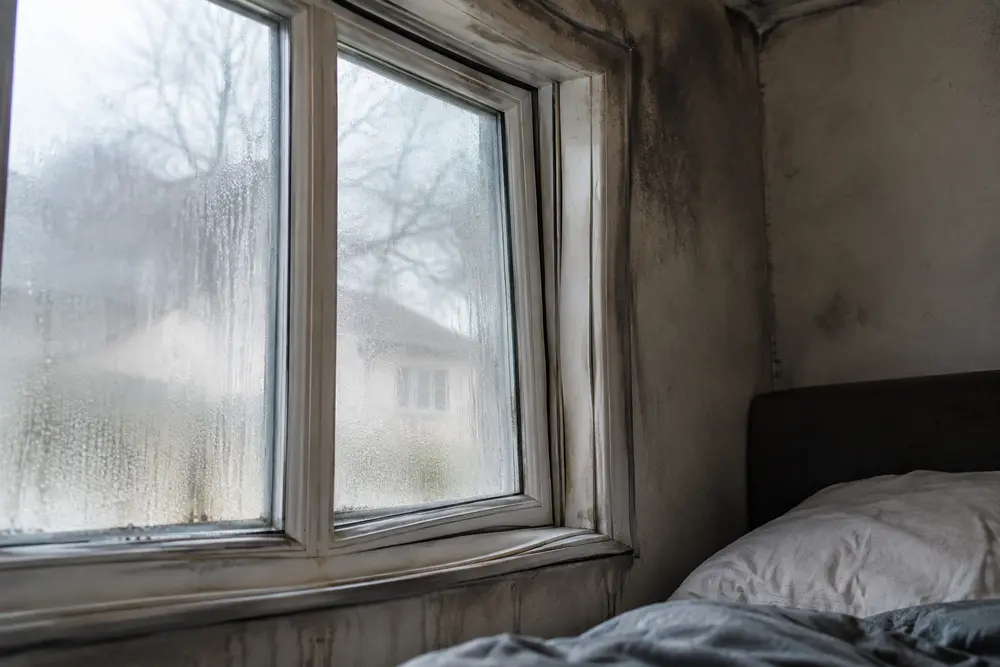
Unbroken glass doesn’t prove that a window survived a fire. Heat can affect the insulated-glass seal or distort the frame while the pane stays exactly where it belongs, which is why a quick soot wipe misses real damage.
Fire damaged windows may look acceptable immediately after cleanup and later develop haze or operating trouble. A sash that suddenly drags matters. So does a lock that only catches when you pull hard on the frame.
Intact Glass Proves Very Little
A window is an assembly, not a sheet of glass with some trim around it. The U.S. Department of Energy explains that window performance depends on the glazing and frame, along with the sealed space in an insulated unit. Damage to one component can affect the whole window.
Consider a double-hung window exposed to strong heat on one side. Both panes may survive, but the sash can lose its original shape. The window may still look normal while closed, then scrape the frame when you lift it.
Mistake One: Is Calling Every Haze Soot
Surface soot changes when the accessible glass is cleaned correctly. Haze trapped between panes doesn’t. If you can clean both exposed surfaces and the cloudiness remains in the same location, you’re probably dealing with something beyond ordinary residue.
Signs of Window Seal Failure After Fire
Window seal failure after fire may appear as fog between window panes or streaks inside the insulated unit. The Efficient Windows Collaborative identifies condensation between panes as a sign that the insulating-glass seal has failed. You can’t reach that moisture with a cloth from either side.
Fire exposure doesn’t automatically prove what caused the failed seal. Age or an earlier installation problem may be responsible. Before-and-after photographs, prior condition records, and comparisons with less-exposed windows help establish what changed. Guessing from one cloudy pane isn’t good enough.
Warped Frames Can Look Normal Closed
Heat-sensitive frame materials can bow or twist without producing dramatic damage. FEMA’s wildfire construction guidance treats glazing and framing as separate parts of window performance, which matters because each can react differently to heat.
Look at the spacing around the sash. One tight corner paired with a wider gap across from it can indicate lost alignment. Shrinking gaskets or distorted glazing stops also deserve attention because they help hold the glass and maintain a weather seal.
Binding Is Evidence Worth Checking
A sticking window is often dismissed as something a screwdriver will fix. Adjustment may solve ordinary wear, but forcing a newly binding sash can hide distortion and strain the hardware.
What happens when a casement lock no longer lines up after the fire? Pulling the sash toward the keeper may make the latch engage, but the lock is now doing work the frame should handle. That isn’t a proper operating condition.
Sliding windows offer another recognizable example. A damaged guide or roller can make the sash hesitate in one spot. If a similar unexposed window moves smoothly, the difference gives you useful condition evidence.
Windows that won’t remain open also need inspection. Affected balances can turn an ordinary window into a falling sash hazard, so don’t keep testing it with your fingers underneath.
Inspect the Whole Window Assembly
A useful post-fire window inspection starts before aggressive cleaning. When you contact Austin Hi-Tech Restoration, ask us to include window condition in the larger fire damage restoration assessment, because surface appearance tells only part of the story.
Record the Starting Condition
Photograph soot patterns and uneven gaps before they’re disturbed. Take wider pictures showing which wall faced the heat, then capture close views of cloudy glass or altered trim.
Check Surfaces and Alignment
Inspect each window from indoors and outdoors when access is safe. Angled light can reveal waviness or deposits that disappear when you look straight through the glass.
- Clean a small accessible area carefully to determine whether the mark is surface residue.
- Look between panes for haze, droplets, or streaks that remain after surface cleaning.
- Compare the spacing around the sash for tight corners or uneven gaps.
- Check weatherstripping for shrinkage or loss of contact.
- Examine glazing gaskets and stops for looseness or distortion.
- Move the sash through its full range without forcing it.
- Engage each lock and note any unusual pulling or lifting needed to align it.
Compare Similar Windows
A matching window elsewhere in your home can provide a practical reference. Compare operating force and latch position. The comparison won’t prove causation by itself, but it can expose a change that would otherwise be blamed on the window’s age.
Don’t remove glazing stops or dismantle the insulated unit to investigate. Concealed damage and disputed conditions are better evaluated by a qualified window or building-envelope professional.
Cleaning Has a Narrow Job
Proper cleaning can remove fire soot on glass when the residue is limited to reachable surfaces. It can’t straighten a warped window sash, restore a failed edge seal, or correct a frame that no longer closes evenly. Repeated polishing is especially wasteful when the mark sits between panes.
Match the Repair to the Damage
Cleaning may be enough when the accessible glass clears and the complete window operates normally. The weather seal should make consistent contact, and the lock shouldn’t need unusual force.
An insulated-glass unit may be replaceable when moisture is trapped between panes but the sash remains square. Product design and parts availability determine whether that option is practical. Anyone promising glass-only replacement before checking the frame is getting ahead of the inspection.
Larger repair or full-window replacement may be appropriate when the frame has warped or hardware attachment points have distorted. Replacement glass won’t correct bad geometry. On the other hand, replacing every exposed window solely because soot touched it is usually overkill.
Document Changes Before They Disappear
Early photographs preserve conditions that cleanup may remove, but continued observation matters too. Interpane fog can become easier to see as temperature or humidity changes. There’s no universal schedule for when a compromised seal will become obvious.
A window that can’t close or lock may leave the building exposed before a permanent repair is available. Temporary emergency board-up services can secure the opening without pretending the underlying window problem has been resolved.
Questions to Ask Before Work Starts
Ask what was inspected beyond the glass and where the suspected damage sits. You should also ask whether the proposed work corrects the operating problem. Fire damaged windows should be judged by the complete assembly, because a clean pane means very little if the sash binds or the seal has failed.
Common Questions About Heat Damage
How Soon Can Fog Appear Between the Panes?
There’s no fixed timeline. Visibility can change with outdoor temperature and indoor humidity, so a compromised insulated unit may look clear during one inspection and cloudy under different conditions.
Does Fog Prove the Fire Caused Seal Failure?
No. Fog supports a diagnosis of seal failure, but it doesn’t establish when or why the failure occurred. Earlier photographs, maintenance records, and the condition of comparable windows provide better context.
Can One Pane of Insulated Glass Be Replaced?
Insulated glass is generally manufactured as a sealed unit, so replacing one pane in place usually isn’t the same as restoring the original assembly. A window professional can determine whether the full glass unit is replaceable within your existing sash.
Should Nearby Windows Be Inspected Too?
Yes, if they faced similar heat or smoke exposure. Conditions can vary across the same wall, so each window still needs its own check for trapped haze, altered alignment, and changed operation.
References
- Benefits: Cut Condensation – NFRC Consumer Guide to Windows (efficientwindows.org)
- wildfire construction guidance (fema.gov)