
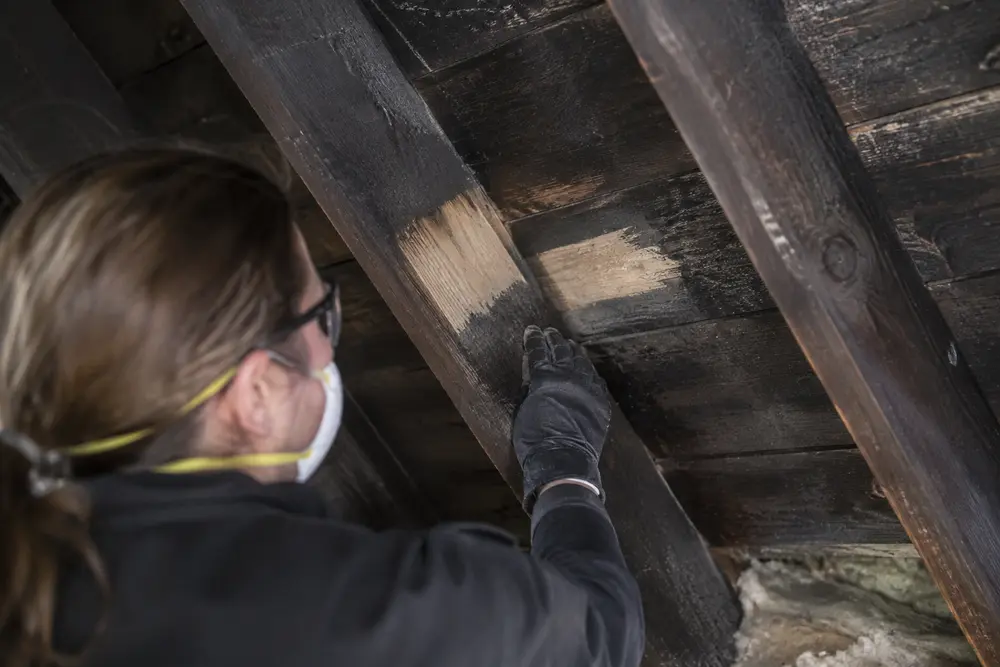
You open the attic hatch after a house fire and find rafters that look like they were brushed with black paint. Some areas wipe onto a glove. Other patches feel crusted onto the wood. That difference determines whether you’re cleaning deposited soot or removing part of the rafter itself.
Choosing between soda blasting soot from structural wood and dry ice blasting soot comes down to char depth and access. Soda can cut stubborn residue faster, but it leaves bicarbonate behind and can erode sound grain. Dry ice leaves no spent blast medium, though the soot still has to go somewhere.
The wrong goal is making every rafter look freshly milled. Cosmetic uniformity can cost you sound wood, especially where the framing has softened after heat exposure. Your real goal is a firm, inspectable surface that meets the requirements for any sealer or coating that follows.
Soot and Char Need Different Decisions
Soot sits on the wood as deposited contamination that may be loose and powdery or tightly bonded to the surface. Char is thermally degraded wood. When a contractor removes char, the contractor is removing part of the framing, even if that material is already damaged.
Black color alone doesn’t tell you which condition you have. A hard rafter with superficial smoke deposits may clean up with HEPA-filtered vacuuming or another controlled dry method. Starting with blasting on that surface is usually overkill. Loose material should come off first so the test area reveals what is actually attached to the wood.
When char runs deep, the job changes because the American Wood Council’s fire design resources distinguish the charred layer from the remaining wood section used for structural evaluation. Neither blasting method replaces lost cross-section or restores heat-damaged fibers.
Watch for wood that feels soft or shows visible distortion. Those conditions call for a structural assessment before someone keeps blasting in pursuit of a cleaner color. A pale surface isn’t proof that a rafter can still carry its intended load.
How the Two Methods Work
Both methods propel material through a nozzle, but they solve different problems. Soda relies on abrasion. Dry ice combines pellet impact with rapid cooling before the carbon dioxide changes directly into gas. Settings and operator control matter as much as the method name.
Soda Uses Controlled Abrasion
Soda blasting uses sodium bicarbonate particles that strike and fracture against the surface. That abrasion can remove thin, adherent char that ordinary surface cleaning leaves behind. The same process can raise the grain or wear away softer growth rings when the pressure is too high or the nozzle stays in one spot.
The risk of permanent surface damage is explained in the National Park Service preservation guidance on abrasive cleaning. Fire-damaged rafters aren’t historic masonry, but the same practical warning applies. Once sound material is blasted away, you can’t put it back.
Dry Ice Trades Media for Gas
Dry ice equipment accelerates solid carbon-dioxide pellets toward the surface. As described in this dry ice blasting process overview, the pellets strike the contamination and then sublimate. This avoids leaving a separate pile of bicarbonate media in cracks and around connectors.
Even dry ice can damage wood because pressure and dwell time affect the result. It may take repeated passes on tightly bonded char, and aggressive passes can disturb weak fibers. This method is often a strong first test when residue recovery would be difficult on checked framing.
The Attic Changes the Choice
Soda’s biggest drawback often appears after the blasting stops. Spent bicarbonate mixes with soot and then settles into insulation. If an attic contains loose-fill insulation or crowded mechanical runs, detailed recovery can become a project of its own. Residual alkaline material may interfere with a later coating unless the surface is cleaned to that coating manufacturer’s requirements.
Eliminating spent blast media doesn’t eliminate debris because every loosened soot particle still needs controlled collection. Dry ice introduces carbon dioxide into the work area as well. The NIOSH carbon-dioxide guidance is a good reason to reject casual claims that attic ventilation will somehow take care of itself. A narrow attic with a low roof slope needs a real ventilation and worker-safety plan.
Firefighting water adds another issue that neither method fixes. Wet framing has to be dried and its moisture condition verified before enclosure or coating. A complete fire damage restoration plan from Austin Hi-Tech Restoration treats blast cleaning as one part of the work because cleaning a visible rafter doesn’t address damp insulation or contamination inside connected cavities.
Test the Wood Before Full Production
A representative test patch tells you more than a sales pitch about which system is gentler. The patch should include the actual surfaces causing concern, such as a hard smoke-coated rafter and a nearby area with shallow char. Testing only the easiest square foot proves very little.
On hard wood with superficial deposits, begin with the least aggressive cleaning that works. If blasting is still needed, a dry-ice test may make sense where soda residue would be nearly impossible to recover. The result should be evaluated after loose material has been vacuumed away, not while the surface is hidden by airborne dust.
Thin, adherent char deserves a direct comparison because soda may remove it in fewer passes while dry ice may preserve the surface texture better. That outcome can reverse with different lumber density or moisture content. This is why blanket promises about either method are hard to take seriously.
The stopping point should be based on wood condition. Loose contamination should no longer shed, and the remaining surface should be firm under the assessment method selected for the project. Grain erosion should stay within the acceptance criteria established before production begins.
Deep char or meaningful section loss isn’t a cue to turn up the pressure. Cleaning should pause while a qualified structural professional decides whether the member can remain or requires repair. Blasting harder only makes the remaining dimensions smaller.
Before blasting painted framing, the contractor needs to determine whether an older coating could spread particles through the attic. When applicable, the contractor should address coating identification and the federal lead-safe renovation requirements before selecting equipment or containment.
Questions to Ask Before Blasting
Your contractor should be able to explain the proposed result in terms of wood condition, not promise that everything will look new. Get those expectations settled before equipment reaches the attic.
Are You Cleaning Soot or Removing Char?
Ask how the contractor will distinguish surface deposits from degraded wood and document char depth where it matters. If the answer is based entirely on color, the assessment isn’t good enough. Ask whether HEPA vacuuming or controlled dry cleaning will be tried before soda blasting soot that may already be loose.
What Will the Test Patch Prove?
Ask which pressure and standoff distance will be used during the test, along with the defined stopping point. The contractor should explain how the patch will be checked for sound growth-ring loss and what would cause the method to be rejected.
Where Will the Removed Material Go?
For soda, ask how bicarbonate will be kept out of insulation and recovered from joints. For dry ice, ask how dislodged contamination will be captured and how carbon-dioxide levels will be managed. “The pellets disappear” answers only half the question.
Who Decides the Rafters Can Remain?
Ask who evaluates deep checking or damaged connections. You should know what condition the wood must meet before sealing or encapsulation. If the proposed plan relies on clean appearance as proof of structural soundness, don’t approve full production.
References
- Preservation Briefs – Technical Preservation Services (U.S. National Park Service) (nps.gov)
- Dry Ice Blasting Solutions – Dry Ice Blasting & Cleaning – Dry Ice Blasting Equipment Manufacturer (coldjet.com)
- CDC – NIOSH Pocket Guide to Chemical Hazards – Carbon dioxide (cdc.gov)
- Lead Renovation, Repair and Painting Program (epa.gov)