
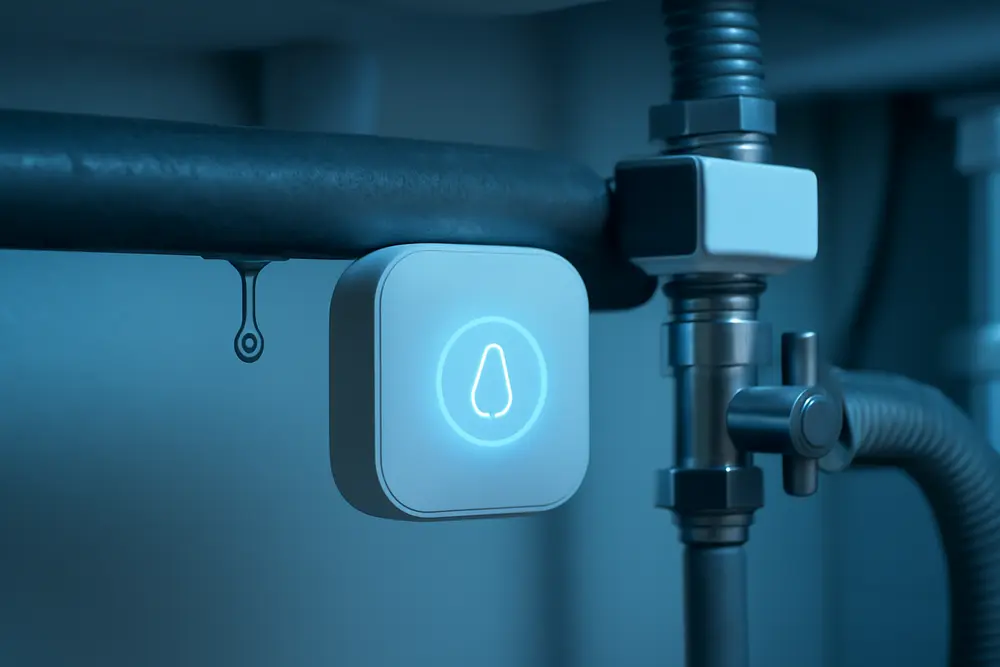
Water has zero chill. It will snake out of a pinhole, wreck a wood floor, fry a breaker, and turn your upstairs laundry into a downstairs waterfall before your coffee finishes brewing. The fix is to stop the flood before it starts. That is exactly what smart leak sensors and automatic water shutoff valves do. They watch, they squeal, and when they are paired right, they cut the water so a leak stays a drip instead of a six-figure remodel. If you live in Austin or anywhere in Texas where pipes freeze and burst on a moody February morning, this gear is not a nice-to-have. It is your house’s bouncer.
How Smart Leak Protection Works
Smart leak sensors spot trouble. Automatic water shutoff valves end it. The magic is in connecting them so a wet sensor or suspicious flow pattern tells the valve to close. You get an instant alert, the water stops, and your drywall breathes a sigh of relief. The better systems play well with your phone, include battery backups, and keep a log of what happened so your insurer does not treat your claim like a fish story.
Here are the capabilities that separate solid gear from stress toys:
| Feature | Why It Matters |
|---|---|
| Auto shutoff from flow or leak trigger | Shuts water fast so a leak does not become a flood. |
| Real-time alerts with app integration | You see it and act from anywhere, even on vacation. |
| Multiple sensor support | Protects more than one spot because leaks never stick to one room. |
| Battery backup and fail-safe modes | Works during outages and keeps protecting during storms. |
| Flow monitoring and event logs | Useful for insurance and diagnosing weird usage spikes. |
| Compliance and safe materials | UL, FCC, and lead-free ratings keep you code-friendly and safe. |
There is also a growing category of retrofit controllers that twist an existing lever shut. A real example is the Aqara Smart Valve Controller T1, which is Matter-compatible, runs about $70, clamps onto lever or butterfly valves, supports three common pipe sizes, and runs on four AA batteries for roughly two years. Pair it with your leak sensors, and it can close the valve when one of them screams for help.
What You’ll Spend
Sticker shock is real, but water damage shock is much worse. Here is the budget reality check.
Standalone smart leak sensors typically land in the 20 to 50 dollar zone per sensor. The cheap ones chirp. The better ones join WiFi or Bluetooth and push app alerts. For the main event, automatic water shutoff valves and full home systems start roughly at 200 to 400 dollars for a single valve kit and climb as you add sensors and features.
Installation is where the fork in the road shows up. If you are just adding sensors under sinks and behind the washer, that is an easy DIY. A valve on the main water line can be DIY if you are handy and your codes allow it, but most homes will want a licensed plumber. Expect a few hundred dollars for a clean install on an accessible line. If a shutoff gets added in a tight crawl space or you need a section of pipe reworked, labor can climb. The job is usually still cheaper than replacing a single square of wood flooring in your kitchen.
Now, line that up with what water damage costs in Austin. Minor cleanups often run 1,200 to 3,500 dollars. Moderate losses in the 3,500 to 7,500 dollar range are common. If a supply line pops and sits for hours or mold gets a foothold, $15,000 is easy to blow past. That is why a few hundred bucks in prevention gear is not an upsell. It is math.
Where To Put Sensors
Sensors do their best work where leaks start. Aim for the splash zones and the sneaky drip areas. Place each sensor where the first drop would collect, not where you hope water never goes. And remember, a sensor needs to physically touch water. If the feet do not get wet, it will not trigger.
High priority targets include the base of water heaters, including the drain pan. Tank heaters often fail at the bottom and weep into the pan first. Put a sensor where that water lands. Upstairs laundry areas are notorious, so tuck one behind or under the washing machine near the supply lines and drain hose. Washing machine hoses are repeat offenders, and they do not care if it is Sunday morning.
Under kitchen and bathroom sinks, position a sensor at the back under the P-trap and near the supply stops. Water tends to run along the cabinet base and pool at the lowest points. Under refrigerators that feed an ice maker or dispenser, place a sensor where the line enters the cabinet or where the water line bends. Toilet zones are a must because supply lines and wax ring seals fail quietly. Put a sensor behind the toilet near the shutoff and at floor level near the base, especially if your bathroom floor slopes.
Want to cut down false alarms? Avoid known condensation puddle spots like the flue of a high-efficiency heater or AC condensate lines that sweat. If an area routinely gets a harmless drip, either move the sensor or use a sensor with adjustable sensitivity. For products that ship with a thin-wired probe, stick the probe at the actual low point while keeping the body of the sensor out of the puddle zone so the radio stays dry.
If you want a quick checklist to work through the house, start with water heater bases, under every sink, behind washers, near refrigerators with ice lines, and around toilets. Those spots catch most problem leaks because they involve pressurized lines or seals that age. Where To Put Shutoff Valves
Think of shutoff valves in tiers. The main water line is the big red button. Put a smart shutoff on the main, and a catastrophic leak anywhere on the system becomes a non-event. If your home has a single obvious main with room for a motorized ball valve, that is the best place to start. Everything downstream gets protected by default.
Then consider hot spots. A local shutoff for a washing machine is like security on a rowdy bar stool. If a machine hose bursts, a dedicated valve for that branch can choke it off without taking the whole house offline. Dishwasher lines, fridge lines, and sometimes a separate upstairs zone can benefit from local control, too.
Whatever you install, make sure you can reach it. You will want to test the valve a few times a year. Motorized valves prefer to move once in a while so sediment does not glue them in place. If you rely on a retrofit handle turner rather than a plumbed-in smart valve, confirm it has the torque for your valve size and that the clamp is rock solid on the handle. A slipping clamp in an emergency is the wrong kind of suspense.
Insurance Perks You Can Actually Get
Insurers like homes that do not flood. Many offer annual premium discounts in the 3 to 10 percent range for leak detection with automatic shutoff and real monitoring. Some will even reduce a deductible or offer a small rebate when you install a qualified system. The string attached is that they tend to want specific features.
What they usually ask for is automatic shutoff instead of alarm only, proof of real-time alerts via app or text, event logs that show when the system saw a problem and what it did, and components that meet certification and lead-free standards.
Texas carriers often stick to the same rules and add a reminder that they cover sudden and accidental damage, not slow leaks that rot a cabinet for months. That is another reason to get monitoring and logs in place. If a sensor caught a drip and you fixed it, you have the receipts and the data. Your rate conversation later is a lot less painful. Always ask your insurer what qualifies, whether a pro install is required for the discount, and how they want the documentation. Requirements vary, and they change policies more often than your water heater changes moods.
DIY Or Hire A Pro?
You can absolutely place sensors yourself. They are small, battery-powered, and most connect in minutes. Use naming that makes sense in your app, like Kitchen Sink Left or Upstairs Washer Back, so you do not have to play guess-the-beep during an alert. For shutoff valves, it depends. If you are clamping a smart handle turner on a smooth, accessible lever, have at it. If you are cutting into copper, sweating fittings, or wrangling PEX on the main, bring a licensed plumber. It is clean work when it is done right, and your insurer may require pro installation to qualify for perks.
While you are at it, add a drain pan under the water heater and any indoor equipment that drips, and route that pan to a drain or a safe spot. The pan is not a substitute for a shutoff, but it buys time and gives your sensor a puddle to detect. If your home loses power often, pick a system with a battery backup or a valve that defaults to closed on command even if the hub goes quiet. Then test it with WiFi off and the breakers off, so you know how it behaves when the lights are out.
Austin Home Playbook
We see what Austin weather does to plumbing. Hard freezes snap lines, attic tankless units seep after thaw, and irrigation systems try to reenact Old Faithful. A whole-home shutoff on the main is killer protection when the forecast says hard freeze. Shut the water at the app, open the faucets to relieve pressure, and go thaw pipes without the dread. If you have an upstairs laundry, put a sensor under the machine and a local shutoff on the supply lines. That setup has saved more wood floors in this town than any single trick we recommend.
Slab homes love to route the main up a wall cavity. If your valve is hidden behind a panel, a retrofit handle-turning controller can be a neat way to add smart control without cutting drywall. Crawl space homes call for rugged sensors on the ground near low points and any exposed PEX manifolds. For well systems and rainwater setups, you will want a compatible valve on the pressure line after the tank but before the manifold, and a plan for power loss so the valve still closes when the pump is down.
If you want practical upkeep to reduce risk, Austin Hi-Tech already rounded up home maintenance habits to catch small plumbing issues early, including inspecting under sinks and around water heaters. Pair that with alarms and a shutoff, and you are playing on easy mode. For freeze readiness, their local guide to protecting pipes is a good seasonal checklist.
Setup And Maintenance Tips
Start with a map. Walk around your home and mark every water source and connection. Pick sensor spots as if water will hit the floor at the worst angle, because it will. Label or name each sensor in the app with plain language and room names. Test by pouring a spoonful of water where a leak would land and verify the app screams. If the system supports it, set up an automation that closes the main valve when any high-priority sensor goes crazy and then sends you and your spouse a text. Add a delay only if you have frequent harmless drips in an area.
Change batteries on a schedule, not when the chirp starts. Twice a year, with your smoke detector batteries is easy. Wipe dust and hair from sensor contacts quarterly, because a dust bunny can behave like a fuzzy little raft. Open and close the motorized valve a few times every season. If it feels like it sticks, flush or clean it before it decides to freeze in place during an emergency. Update firmware on hubs and valves so you get security fixes and better leak detection logic. Keep the event logs turned on and backed up. Those timestamps matter if you ever file a claim or want to diagnose a phantom 3 a.m. flow spike.
One extra tip for smart home fans: if your system is Matter, HomeKit, or similar, integrate leak sensors into scenes. For example, arm Night Mode to make any leak after midnight auto-close the main, turn on hallway lights to 20 percent, and ping your phone. It turns panic into a routine.
What About The Cheap Stuff?
Basic leak buzzers that beep without an app are better than nothing. If you are home and awake, they can save a cabinet. They usually do not qualify for insurance discounts, and they will not help if you are on South Congress when a toilet supply line lets go. The sweet spot for most homes is a few smart leak sensors in the right places and either a full-time smart valve on the main or a well-mounted valve controller on the handle. That mix keeps costs sane and coverage strong.
FAQ
Are basic leak alarms enough for a discount?
Usually no. Most insurers want automatic shutoff and real monitoring to offer a measurable discount. A chirp-only puck might be appreciated, but it rarely moves your rate.
How many sensors do I actually need?
Start with one per high-risk area. That means the water heater, every sink base, behind the washer, near the fridge line, and around each toilet. Bigger homes, basements, and crawl spaces often need a few extras to cover low points and manifolds.
Can I install everything myself?
Sensors are easy DIY. Retrofit handle controllers are DIY if the clamp fits and the handle moves freely. Cutting in a new motorized valve on the main is usually a plumber’s job and may be required for insurance incentives in some policies.
What happens if the power or WiFi goes down?
Good systems include battery backups and local shutoff logic so they still close the valve if the network drops. Test this once a year by turning off WiFi and power to confirm your setup still reacts.
Do I need a whole-home valve if I install local valves?
Local valves help, especially on washers. A whole-home valve is the safety net for leaks you did not plan for, like a burst line in a wall. If you are choosing only one, the main line wins.
Do these systems catch slow leaks behind walls?
Flow-based systems can flag unusual continuous flow, which hints at hidden leaks. Sensors catch water when it finds a way out. If you suspect a hidden leak, use flow data to guide a plumber, not as a substitute for investigation.
Will a smart valve help during a freeze?
Yes. You can preemptively close the main before a hard freeze and reopen once pipes are thawed and checked. It also reacts if a pipe pops while you are asleep or away, so you are not walking into a slush pond.
Is there any maintenance?
Battery changes, sensor cleaning, and quarterly valve exercises. Keep firmware current and review alert settings twice a year so new phones or numbers get the ping.
Real-World Shopping Tips
Check that your sensors and valve live in the same ecosystem or at least talk through a common hub. If you want the valve to react to any sensor on your account, make sure the automation rule is supported without a subscription. Confirm the valve size matches your pipe and that the actuator can handle the pressure rating. For retrofit handle controllers, verify they are rated for your handle style and that the clearance is there once the cover is back on the box.
Read the spec sheet for compliance badges like UL for the electronics, lead-free for the valve body, and FCC, where applicable. Keep those PDFs. If your insurer ever asks, you have the paperwork. Take pictures of the install, label the shutoff location, and store plumber invoices in the same folder. Insurers love documentation, and it helps your future self, too.
The Case For Acting Now
The average sensor costs less than dinner for two on West 6th. A main-line smart valve with installation usually lands in the same ballpark as cleaning up one minor overflow. Austin’s restoration bills climb fast once water soaks into the cabinets and subfloor. When you add possible insurance discounts on top of avoided damage, the payback is usually measured in one saved scare, not decades.
If you want a starter kit, begin with smart leak sensors under every sink, by the water heater, at the fridge, and by toilets. Add a smart shutoff to the main or clamp a proven handle controller like the Aqara T1 to your valve and link it to those sensors. Then test everything, grab screenshots of the event logs, and call your carrier to ask about their discount. If you want ideas for which brands are in stock around Austin and how they compare on features, ask, and we will line up a side-by-side with local availability.