
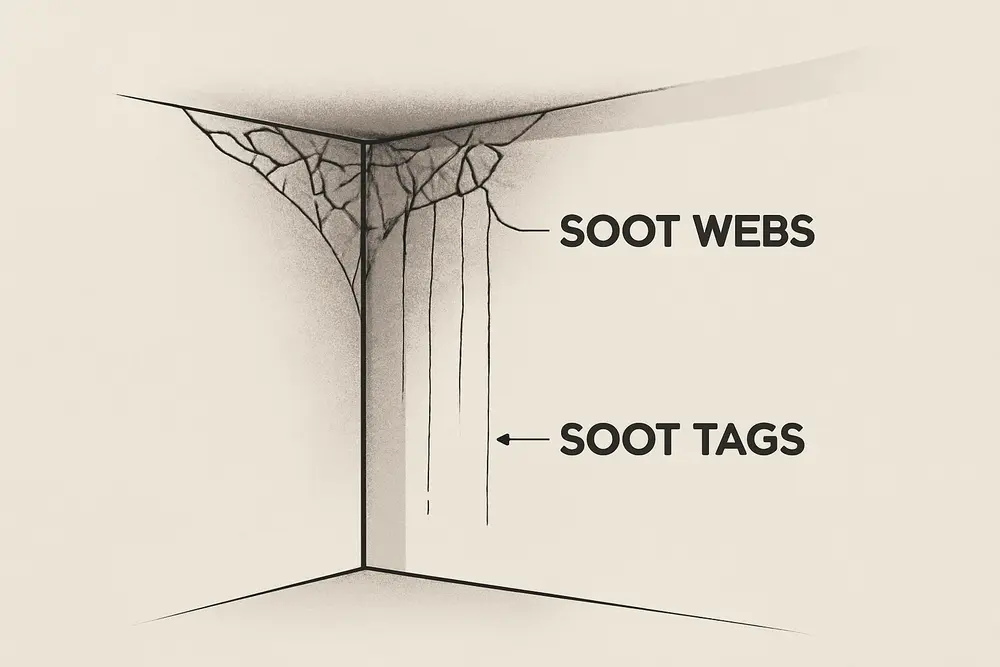
If you just walked back into a soot-kissed home and saw thick black cobwebs that seem to have bred overnight, spoiler alert, you do not have superhero spiders. Those creepy chains are soot webs, also called soot tags. They pop up after a fire or heavy smoke event, and if you treat them like normal dust, you will smear them into a permanent shadow and lock in the stink. Here is how soot tags form, how to spot them fast, and the exact tools and techniques that clear them without grinding odor deeper into your walls and ceilings.
What Are Soot Webs And Soot Tags?
Soot webs look like stringy, cobweb-like chains hanging in corners, along ceiling-to-wall lines, around vents, and near door headers. They are not spider silk. They are long chains of charged soot particles and combustion byproducts that cluster in cooler, low-airflow zones. During a fire, hot smoke carries ultra-fine particles. As air cools near exterior walls, ceilings, and cold surfaces, those sticky particles latch onto each other and form visible strands. Plastics and synthetic materials throw oily soot that loves to clump into these chains.
Common hotspots include the top corners of rooms, above doorways, around HVAC registers, crown molding, and the leeward side of obstacles where air stalls. If you see sudden thick, dark strands right after a fire event, you are looking at soot tags, not a spider convention. For a quick explainer from another source, check out this SERVPRO guide.
Soot Webs vs Cobwebs
Real cobwebs are thin, dry silk that collect household dust over time. Soot webs show up fast after smoke exposure and look thicker, darker, and sometimes glossy or tar-like. Try these tells:
Location gives it away. Soot tags collect where smoke drifted and cooled, like ceiling corners and near returns. Natural cobwebs are wherever spiders feel like living, usually not in uniform ceiling lines across an entire room.
Texture and transfer are a giveaway. A light touch with a clean white index card will often leave a gray-black smear from a soot web. Real webs usually snap or ball up without leaving an oily mark. Do not do this on your painted surface, use a disposable card and be gentle.
Timing matters. If you had no visible webs yesterday and after a small kitchen flare-up you have them everywhere today, that is soot tagging, not overnight arachnid hustle.
Why Removal Matters
Soot is more than ugly. Those particles can be acidic and corrosive, especially when mixed with humidity. Left alone, soot can etch metals and finishes, stain paint, and keep pumping out odor. Oily soot from plastics can bleed through new paint if you do not remove or seal it correctly. Health-wise, fine soot can irritate airways and eyes. If you want a deeper primer on what soot can do, BELFOR’s overview is solid reading at belfor.com.
Gear That Works
Skip the wet rags and household all-purpose cleaners out of the gate. You need a dry-first approach with the right tools so you do not smear residue into pores.
What to use:
- HEPA vacuum with a soft brush attachment. True HEPA captures ultra-fine soot. Start here to pull loose particles.
- Dry chemical sponges made of vulcanized rubber. These lift soot by grabbing it dry. Do not get them wet.
- Targeted detergents for wet cleaning after dry removal. Mild to alkaline cleaners work for carbon-soot on painted walls. Enzyme-based cleaners help on protein soot from kitchen fires. Oily plastic soot may need a stronger alkaline cleaner. Always test in a hidden spot.
Safety must-haves:
- N95 or better respirator, gloves, and eye protection.
- Turn off HVAC and cover supply and return vents during cleanup so you do not redistribute soot.
- Cover floors and contents in the work zone. Poly sheeting and tacky mats keep footprints from tracking soot around.
Want a short read on chemical sponges and why they work before water touches the surface? Here is a helpful guide from All Nation Restoration at allnationrestoration.com.
Step-By-Step Removal
| Step | Action | Tips That Prevent Smearing |
|---|---|---|
| Prep | Shut off HVAC and seal vents. Isolate the room. Protect floors and contents. | Containment stops soot from hitchhiking into clean areas. |
| HEPA Vacuum | Gently vacuum webs and surfaces from the top down using a soft brush. | Let the brush float on the surface. Do not grind soot into paint or texture. |
| Dry Sponge | Use dry chemical sponges with a press-and-lift motion. | Do not scrub. Rotate the sponge to a clean face often. Slice off soiled faces with a utility knife. |
| Targeted Wash | After most soot is lifted dry, wet clean with the right detergent. | Alkaline for oily carbon soot. Enzymes for protein soot from cooking. Work small sections and rinse. |
| Neutralize | Rinse residues and dry quickly with airflow. | Cleaner left on surfaces can cause haze or corrosion. Drying fast reduces odor. |
| Odor Control | Treat stubborn odor sources and clean or replace HVAC filters. | Hydroxyl generators run in occupied spaces. Thermal fogging and ozone should be pro-handled with the area vacated. |
| Prime and Paint | Spot-prime stained areas with a stain-and-odor blocking primer. | Only after surfaces are clean and dry. Then topcoat to match. |
Mistakes To Skip
- Starting with water. Wet cleaning first will smear soot and drive odor deeper.
- Scrubbing like you are washing a garage floor. Press-and-lift is the move.
- Running HVAC while cleaning. You will feed soot into ducts and every bedroom pillow.
- Skipping test spots. Cleaners can dull or streak certain paints and wallpapers.
Real-World Examples
Kitchen protein fire. You burned a roast and now the ceiling has a yellow-brown film plus dark soot tags in corners. That residue is sticky protein soot. After HEPA and dry sponge passes, you will want an enzyme cleaner on the film, gentle agitation with a microfiber, and thorough rinsing before any primer.
Plastic-heavy room fire. A TV, a speaker grill, and a few plastic bins burned. Expect oily, jet-black soot that loves to smear. Take extra time with the HEPA pass, then dry sponge until the sponge face stays clean, then use a mild-alkaline cleaner. Rinse and dry aggressively before any paint work.
Odor Control That Lasts
Even after soot tags are gone, odor can hide in porous materials, insulation voids, and ventilation. Clean or replace HVAC filters and consider a duct inspection if the system was running during the event. For space-wide odor that lingers, hydroxyl generators can run while people occupy the area and work slowly but steadily. Thermal fogging can match the smoke’s spread path to neutralize odor in tricky spots. Ozone can help in some cases, but only with pro controls, nobody inside, and full airing out afterward. If odor persists after cleaning, priming with an odor-blocking primer on affected surfaces caps the job.
When To Call A Pro
If the fire touched synthetics like plastics or foam and you see thick oily soot on ceilings and walls, call in backup. If soot webs run through multiple rooms, if your HVAC was on, or if strong odor hangs on after your first pass, pro equipment and methods save you time and do not gamble with your lungs. Our team handles full fire damage restoration, smoke removal, deodorization, and documentation for insurance. You can learn more about services at Austin Hi-Tech Restoration.
FAQ
Do soot webs mean I had a big fire?
Not always. Even a small cooking flare-up or a space heater mishap can produce enough smoke to create soot tags in cooler corners. The size of the webs does not always match the size of the fire, it matches how smoke moved and where it cooled.
Can I just paint over soot tags?
You could, but you will regret it. Paint locks in odor and can let staining bleed through. Remove soot dry first, wet clean the residue, fully dry, then use a stain-and-odor blocking primer before paint.
Will a shop vacuum work instead of HEPA?
A regular vac can blow fine soot right back into the room. A HEPA-filtered vacuum traps tiny particles that cause odor and staining. If you do not have one, skip the vacuum and go straight to careful dry sponge work until you can source HEPA equipment.
Are chemical sponges reusable?
Yes, until the faces get loaded. Rotate to a clean face as you work and slice off soiled layers with a sharp blade. Never wet them or they turn into a smear stick.
How do I keep soot webs from coming back?
They are a symptom of smoke, not a recurring pest. Once the smoke source is gone, surfaces are cleaned correctly, and HVAC and contents are addressed, new soot webs should not form.
If you are staring at black strings in every corner and your instinct is to grab a wet rag, take a breath and back away. Dry lift first with HEPA and chemical sponges, then bring in the right detergent. That order keeps your walls clean and your nose happy. If you want help, we are fast, we are thorough, and we are not afraid to get a little sooty so you do not have to.
More reading you may find useful: chemical sponge how-to, soot tags explained, and what soot is and why it matters.