
You crack your closet, catch a whiff of gym-sock-after-a-rainstorm, and think, “Where’s that coming from?” Here’s the bad news: mold loves closets. It loves them because you unknowingly built the perfect microclimate. Stagnant air, cool exterior walls, trapped humidity, and organic surfaces all team up to feed the fuzz. The good news is that you can flip the script fast with closet microclimate control. Ventilated shelving, smart airflow tweaks, targeted dehumidification, safe cleaning, and a few material upgrades turn your closet from mushroom farm to clean storage. And if the growth is hiding behind drywall or baseboards, I’ll tell you when to stop scrubbing and call a pro.
What Is A Closet Microclimate
A closet microclimate is the little weather system you’ve got going in a small, enclosed box. Doors stay shut, clothes pack tight, shelves hug walls, and suddenly air sits still. Still air means moisture can’t escape. Add a cool exterior wall, some daily humidity from showers or a steamy laundry room nearby, and you’ve engineered condensation right where your sweaters live. Moisture plus organic materials like cotton, leather, cardboard, and unfinished wood equals mold. It doesn’t need a lot of time either. Give mold 24 to 48 hours of dampness, and it’s filing a change of address form to your closet.
Temperature swings make it worse. Warm air holds more moisture, so when that humid air finds a cold spot on an exterior wall or behind a jam-packed jacket line, water drops out of the air and onto surfaces. That thin film of moisture is all mold needs to colonize paint, drywall paper, unfinished wood shelving, and dusty fabric.
The target is simple: keep relative humidity between 30 and 50 percent, maintain airflow, reduce cold-surface contact, and use materials that do not soak up water like a sponge. Do those things and you’ve got closet microclimate control working for you instead of against you.
Why Ventilated Shelving Wins
Solid shelves look fancy, but they trap moisture and block airflow. Ventilated shelving lets air circulate around and through stored items, which means wet air does not squat under stacks of jeans or behind shoe boxes. Wire shelving, epoxy-coated wire, slatted wood, and open-back designs all help air move. When air can move, moisture can evaporate faster, which breaks the mold cycle.
Here’s the practical difference. A solid wood or particleboard shelf absorbs moisture, stays cooler against an exterior wall, and turns into a damp ledge under your folded clothes. A ventilated shelf encourages convection. Even tiny temperature differences create gentle airflow through those openings, which pushes humid air out and lets surfaces dry. That reduces condensation on the wall behind the shelf and keeps fabric from sitting against a clammy surface.
Skip the plastic shelf liners and airtight bins unless you are storing items that are bone-dry. Use ventilated bins or breathable fabric boxes instead. If you still love the look of wood, go with slatted systems and seal all edges to reduce absorption. Your closet should breathe like a runner, not hold its breath like it’s sneaking past a guard dog.
Fast Airflow Tweaks That Work
Start with the door. Keep it open when you can. If that is not practical, swap solid doors for louvered doors or add low-profile door vents. Even a proper door undercut of about three-quarters of an inch helps move air when the HVAC fan runs. The goal is to give air a way in and a way out so moisture does not stall.
Space is the cheapest tool you have. Do not press clothes flat against walls. Leave at least two inches between fabric and wall surfaces. On rods, give each hanger a finger width of daylight. Yes, it means editing your wardrobe. If your hangers look like a tuna can, mold will RSVP yes.
For small walk-ins, a quiet, low-watt fan on a timer can run 15 to 30 minutes a day to keep air drifting. If the closet shares a wall with a bathroom or laundry, consider a through-wall transfer grille at the top of the wall to let dry conditioned air cycle. Keep the floor clear so air can move under garments. Piles of shoes and cardboard boxes block flow and trap dampness where it is hardest to dry.
Targeted Dehumidification
Buy a simple digital hygrometer and park it at mid-height in the closet, away from the door and not pressed to an exterior wall. Check it morning and evening for a few days. If it regularly rides above 50 percent, you need dehumidification.
For tight closets, a small compressor or desiccant dehumidifier works well. Place it low, keep a few inches of space around it, and empty or drain it regularly. Aim for 40 to 50 percent relative humidity. Silica gel or desiccant canisters help in drawers and closed bins, but they are support players, not the star. Replace or recharge them as directed or they just become fancy mold pillows.
Your whole-home system helps too. Stable thermostat setpoints reduce temperature swings that cause condensation. Exhaust fans in adjacent bathrooms should actually exhaust outside and run for 20 minutes after showers. If your laundry room vents into a closet-adjacent area, fix that immediately. You cannot out-dehumidify a dryer vent that leaks into the house.
Cleaning Mold Safely
Small and local is DIY territory. If the moldy area is under 10 square feet and only on hard, non-porous surfaces like painted trim, plastic bins, or metal hardware, you can clean it. Gear up with gloves, eye protection, and at least an N95. Crack a nearby window or run a fan to the outdoors if possible. Do not mix cleaners. Ever.
Start by vacuuming loose spores and dust with a HEPA vac. Clean surfaces with a detergent-and-water solution and a non-shedding cloth or soft brush. Rinse with clean water and dry fully. For non-porous surfaces, a diluted bleach solution can help with staining, but bleach does not belong on porous materials like drywall or unfinished wood because it cannot penetrate and it leaves extra water behind. If you prefer, 3 percent hydrogen peroxide works as a cleaner on hard surfaces and does not leave chlorine residue. Whatever you use, the most important step is drying the material quickly.
Textiles are case by case. Wash washable clothing in hot water if the care label allows, then dry on high heat until fully dry. Dry-clean only items should go to a professional cleaner and be bagged after they are dry, not before. If a garment smells musty after cleaning and drying, the growth is likely embedded and that item is a quitter. Shoes with foam insoles or paperboard components often need to be replaced because the mold lives where you cannot reach it.
Porous building materials that show growth or smell musty, like drywall, MDF shelving, insulation, and raw wood, usually require removal rather than scrubbing. Painting over moldy drywall does not fix the problem. It just gives the mold a new backdrop.
Smarter Materials And Hangers
Ventilated shelving is your new best friend. Choose epoxy-coated wire or stainless wire systems that resist rust and let air pass through. If you want the warmth of wood, go slatted and seal all faces and edges with a moisture-resistant finish. Skip particleboard in damp-prone closets because it swells, sheds, and feeds mold.
Hangers matter. Thin metal or coated metal hangers keep spacing flexible and do not absorb moisture. Wide wooden suit hangers are fine if they are sealed and not pressed against walls. Avoid plastic dry-clean bags and airtight garment sleeves. They trap humidity around fabric. Use breathable cotton or mesh garment bags instead. Cedar blocks can help with odor and some insects, but cedar is not a mold forcefield. Treat it as a helper, not a solution.
Keep shoes off the floor with ventilated racks. Cardboard shoe boxes are moisture sponges, so switch to breathable bins with vent holes. For flooring, hard surfaces like sealed wood, LVP, tile, or painted concrete are better than carpet in closets. If you must have a rug, make it small, washable, and lift it often. Consider PVC or composite baseboards in closets along exterior walls. In mold-prone regions, upgrading closet walls on exterior sides to mold-resistant drywall with a proper vapor strategy is a smart long-term play.
Hidden Growth And Red Flags
If the smell lingers after a good cleaning, you likely have growth in hidden spaces. Watch for paint that bubbles or peels, baseboards that cup or swell, faint yellow or brown lines at drywall joints, rust on closet rods, or darkening at nail pops. Those are moisture breadcrumbs. Closets that share walls with bathrooms, kitchens, or laundry rooms are prime suspects for slow leaks. So are closets with attic access, crawlspace access, or an air handler parked inside.
I use moisture meters and thermal cameras on jobs because eyes miss what instruments nail. You can do a basic check. If you tap the baseboard and it feels soft or the caulk line is stained, you might have damp drywall behind it. If a wall corner is consistently colder than other surfaces and your hygrometer reads above 50 percent, condensation can be feeding a colony you cannot see. Another clue is rapid rebound. If mold returns within a week or two after cleaning and you are controlling humidity, the source is behind the wall or under the floor.
When To Call A Pro
There is a time to swing a scrub brush and a time to phone a team that lives for Tyvek suits. Call a pro if the affected area is larger than 10 square feet, if growth crosses into wall cavities or under baseboards, if you have persistent odors after cleaning, or if you suspect a leak. Anyone with respiratory issues, mold allergies, or compromised immunity should skip DIY cleanup entirely. If your home was built before 1980 and you plan to disturb paint or joint compound, you also need to consider lead or asbestos rules before cutting or sanding.
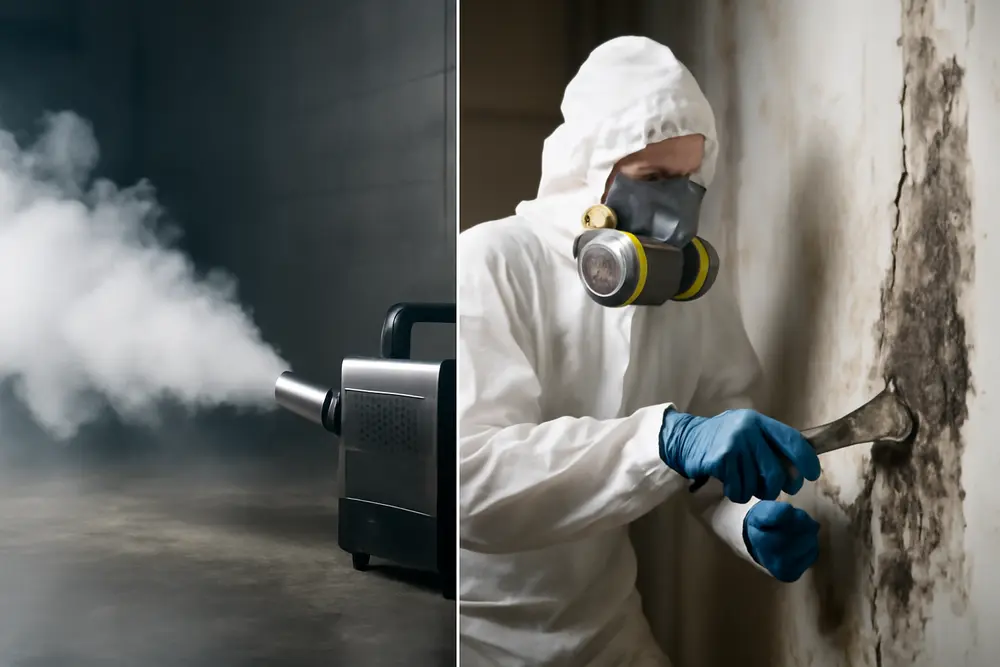
Here is what a legitimate remediation looks like. We find and fix the moisture source first. Then we set containment with plastic and negative air so spores do not go sightseeing through your house. Porous materials with growth get removed in a controlled manner. We HEPA vacuum, clean, and dry the remaining surfaces to target moisture levels and may apply an antimicrobial where appropriate. After reassembly, we verify dryness with meters. If someone is offering a magic fog that kills everything without containment, walk away. Mold is not impressed by shortcuts.
Closet Microclimate Control Plan
| Step | What To Do | Target Or Notes |
|---|---|---|
| Measure | Place a hygrometer mid-height, away from walls | Hold 40 to 50 percent RH daily |
| Ventilate | Install ventilated shelving and add door vents or louvered doors | 2 inch clearance from walls, finger width between hangers |
| Dehumidify | Use a small dehumidifier or desiccant units | Empty or recharge weekly, keep airflow around units |
| Declutter | Remove cardboard, switch to breathable bins | Keep floor clear for airflow |
| Clean | HEPA vacuum, detergent clean hard surfaces | Quarterly, then dry within 24 hours |
| Inspect | Check baseboards, corners, and exterior walls | Look for swelling, staining, or cold spots |
FAQ: Real-World Closet Mold Questions
Why does my closet smell worse in winter?
Winter gives you cool exterior walls and warm indoor air. That combo drives condensation behind tightly packed clothes. Your HVAC also runs differently, and you probably keep closet doors shut to hold heat. Add long hot showers and you have a condensation party with no exit plan.
Should I add a vent to my closet door?
Yes if the door stays closed most of the time. Louvered doors or low-profile vents improve airflow dramatically. Pair that with a proper door undercut and your closet will exchange air whenever the HVAC fan runs.
Can I just bleach closet mold and be done?
Bleach on non-porous surfaces can lighten staining, but it is not a fix for porous materials and it does nothing about humidity. Clean properly, dry fully, control the microclimate, and address hidden sources. If growth is on drywall or raw wood, stop and call a pro.
Are cedar blocks enough to prevent mold?
No. Cedar smells good and can help with insects, but it does not control humidity. It is a supporting actor at best. You still need ventilated shelving, airflow, and RH control.
How far should clothes be from the wall?
Keep at least two inches of clearance and avoid pressing garments into corners. Space hangers so air can pass between shoulders instead of building a solid fabric wall.
What humidity should I hold in the closet?
Keep it in the 40 to 50 percent range. Below 30 percent for long periods can dry out wood and leather. Above 50 percent invites growth if surfaces ever cool off.
Where should I put a dehumidifier in a closet?
Low and central with airflow around it is best. Do not cram it into a corner behind hanging clothes. Give it several inches of clearance and an easy way to drain or an easy bucket to empty.
Stop Mold With Smart Upgrades
Closet mold is not random. It is a microclimate problem with a very fixable recipe. Swap to ventilated shelving, create airflow with door vents or louvers, park a hygrometer, and hold humidity under 50 percent. Clean small spots safely and dry fast. Retire cardboard, use breathable bins, and keep textiles off cold walls. If the smell keeps coming back or you see damage at baseboards or drywall, that is hidden growth time. Call a restoration pro who knows how to open, contain, dry, and rebuild. Get the closet microclimate control right and your clothes will stop living in a rainforest and start living like they should: clean, dry, and boring.