
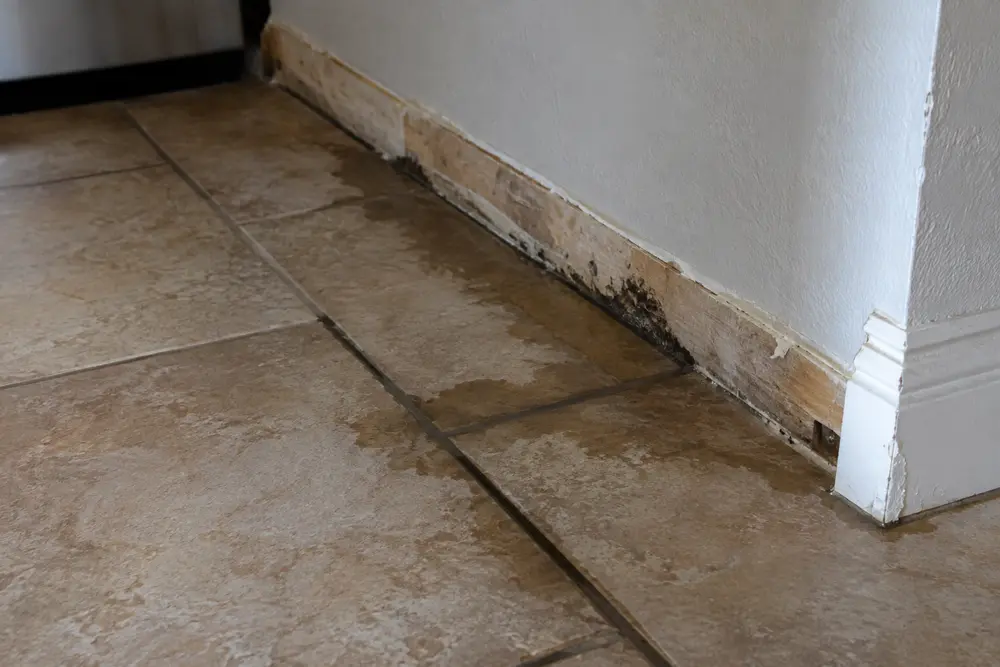
Wet tile is dry only when the affected tile assembly, including the layers below the visible surface, has reached an acceptable moisture condition. You can’t determine that point by appearance or touch alone.
There’s no universal tile floor drying time after a pipe leak. The glazed surface may look normal fairly quickly while the concrete slab continues holding moisture.
That difference matters in an Austin slab home because tile is commonly installed over concrete. Water can enter at wall edges and then spread farther beneath the floor than the original puddle suggests.
Fast action still matters when water reaches the layers below tile. The EPA recommends starting to dry wet materials within 24 to 48 hours to help prevent mold growth, but that response window isn’t a promise that your tile assembly will be dry within two days.
Your room is ready when moisture readings support reopening and the nearby walls or cabinets have been checked. A tile surface that feels warm and dry is encouraging. It just isn’t proof.
Why the Surface Dries First
A ceramic or porcelain tile floor is a layered assembly. The tile face is only the layer you can see. Beneath it, cementitious mortar bonds the tile to a concrete slab or another installation layer, and each material handles water differently.
Glazed tile offers a limited evaporation path compared with exposed concrete. Much of the drying must occur through grout joints or an area opened during restoration. That can make evaporation slow even when fans move plenty of air across the floor.
Moisture under tile can travel sideways beyond the visible puddle. A puddle beside the sink may enter along a cabinet edge and spread beneath tiles that never looked wet. Water follows cracks and voids with no concern for the neat outline you drew around the original puddle.
Porcelain tile doesn’t make the entire floor assembly waterproof, despite a common misunderstanding. Water can still enter through damaged grout or edges hidden beneath baseboards.
What Changes the Drying Time?
The size of the visible wet area isn’t the best predictor of drying time. A brief spray cleaned up immediately is different from a slow supply-line leak that ran behind a cabinet before reaching the floor.
How Water Entered the Assembly
Leak duration often matters more than how dramatic the release looked. A small seep can feed water into a perimeter joint for hours. A larger release may remain mostly on top if you shut it off and extract it promptly.
The plumbing repair must also be verified before drying progress means much. If readings improve and then stall, continuing leakage is one possibility. Residual slab moisture is another, so guessing won’t settle it.
How the Floor Was Built
A direct-bond tile installation over concrete may behave differently from tile placed over a crack-isolation membrane. A thicker mortar bed can hold more moisture, while a membrane can redirect water laterally or limit evaporation through the slab.
Existing slab conditions complicate comparisons because the presence and condition of a below-slab vapor barrier may be unknown in an older home. The Department of Energy explains why vapor barriers beneath concrete slabs affect moisture movement. An elevated reading after a leak doesn’t automatically prove that every bit of detected moisture came from that leak.
What the Indoor Air Is Doing
Drying depends on controlled humidity and useful air movement across available evaporation surfaces. Opening windows can backfire during Austin’s humid periods because incoming moisture may reduce the conditions that drive evaporation. Local weather changes, reflected in the National Weather Service’s Austin climate resources, are one reason the same floor may dry differently during another season.
How Moisture Beneath Tile Is Checked
Good moisture testing starts with a map of the affected area. Repeatable readings are taken across the affected area and toward likely paths of water travel. Similar flooring in an unaffected part of the home can provide a useful comparison when construction conditions match.
Non-Invasive Meter Readings
Capacitance or impedance meters can screen a tiled floor without removing it. They’re useful for showing relative differences and monitoring trends, but their displays don’t reveal an exact quantity of water beneath a particular tile.
Metal or conductive salts can influence a reading. Tile composition and slab density matter too. One low number isn’t a clearance, and one high number isn’t an automatic demolition order.
Thermal Imaging
A thermal camera shows temperature differences rather than detecting water itself. Evaporation may cool a wet area, but sun exposure can create a similar pattern. We use thermal imaging to direct further testing, not to declare an assembly dry from a colorful picture.
When More Direct Testing Is Needed
At Austin Hi-Tech Restoration, our approach to water damage repair in Austin relies on documented drying trends and an appropriate dry standard. When slab conditions require closer evaluation, a qualified professional may consider invasive testing such as in-situ relative-humidity probes covered by ASTM F2170. That involves drilling through the finished floor, so it shouldn’t be the casual first move.
When Can You Reopen the Room?
Reopening involves more than reaching a preferred meter reading. Your room should also be safe to walk through, free of unresolved sanitation concerns, and checked for damp materials next to the tile.
- The pipe repair has been completed and checked.
- Moisture readings show a declining trend and have reached the documented drying goal.
- Comparable unaffected areas have been used where appropriate.
- Baseboards and lower walls have been checked for retained moisture.
- Indoor humidity remains controlled after equipment is adjusted or removed.
- Loose or tented tiles have been evaluated.
Dark grout alone doesn’t establish that the mortar is wet, just as normal-colored grout doesn’t prove the slab is dry. Grout shade can change because of staining or uneven drying. You need the surrounding evidence.
A hollow-sounding tile needs context before it tells you anything useful. It can indicate incomplete mortar coverage that existed before the leak. Water may expose an installation problem, but the sound alone can’t date the problem or identify its cause.
What to Watch for After Drying
Moisture conditions deserve another look after drying equipment is removed. Grout that darkens again or dampness returning along a wall edge can mean retained moisture or continued leakage.
White mineral deposits offer another clue about earlier moisture movement. Efflorescence shows that moisture transported soluble salts, but it doesn’t tell you whether the pipe leak was the source or whether the assembly is still wet today.
A musty odor near baseboards deserves attention even when the center of the floor looks fine. Wall cavities and cabinet toe kicks can stay damp after the exposed tile face has dried.
Seasonal humidity can change what you notice. If readings plateau during a humid stretch, setting a tougher deadline won’t dry the floor. Track the readings and investigate any moisture that returns beyond the original leak area.
References
- A Brief Guide to Mold, Moisture and Your Home (epa.gov)
- Local Climate Records (weather.gov)