
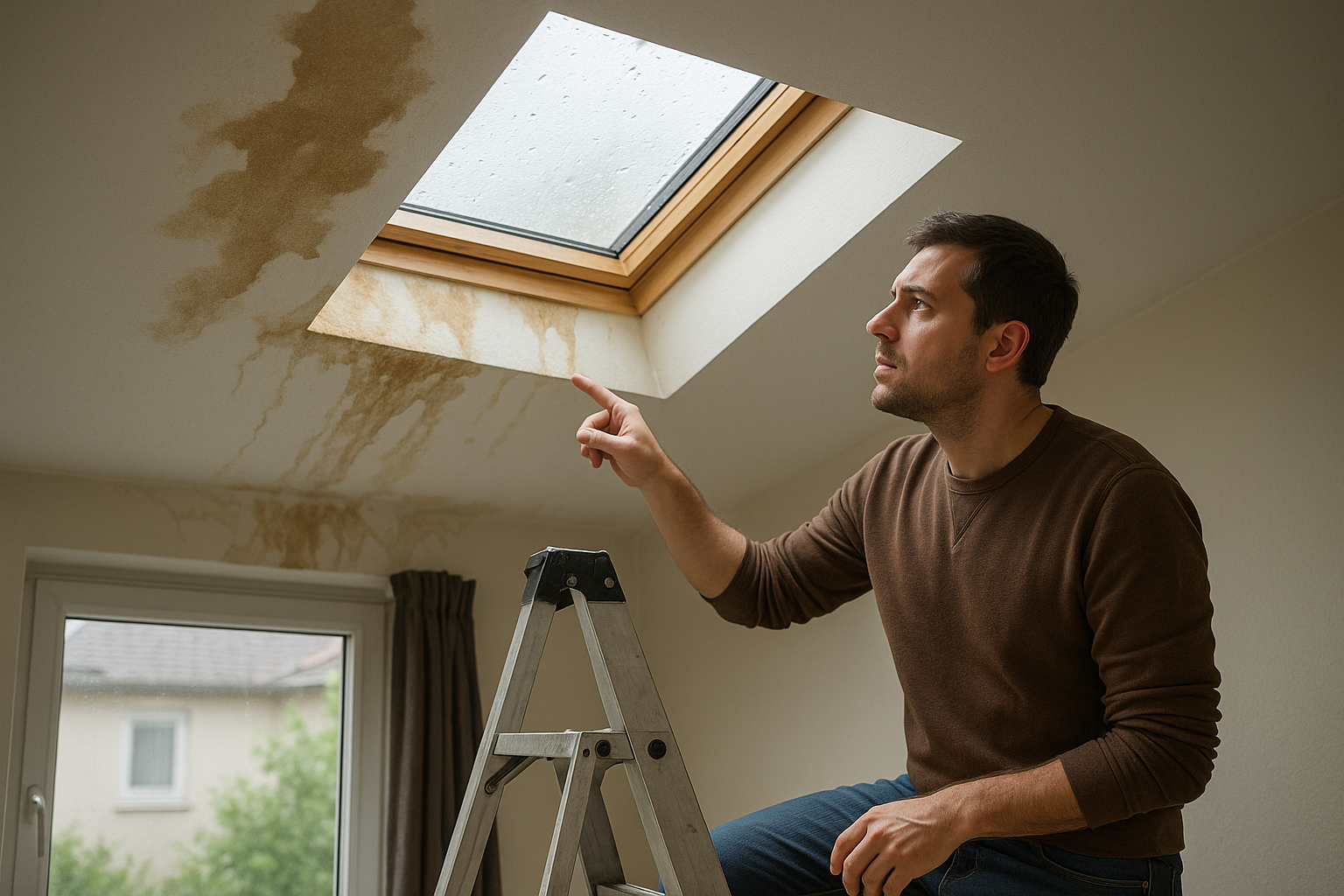
Skylights bring in natural light, but even a small leak can lead to stained ceilings, damaged trim, and mold growth. This guide explains how skylight leaks happen, how to spot early warning signs, and what you can do to prevent costly repairs.
Why Skylights Leak
Most skylight leaks trace back to the parts that are supposed to move water away from the opening. The curb, flashing, and roofing around the skylight form a water-control system. When any part fails or is installed poorly, water finds a path inside. The Building America Solution Center explains that correct flashing is the primary defense and that sealant is only a secondary line of protection. When flashing is missing, undersized, or lapped the wrong way, leaks often follow.
Here are the most common causes we see during inspections and mitigation projects across Austin and nearby communities:
Failed or improper flashing. Flashing is a system of metal or formed pieces that step and lap with shingles or roofing so water sheds away from the curb. It is not just a bead of caulk. If step flashing is too short, counterflashing is missing, or the apron flashing at the bottom is bent or corroded, water can slip under shingles and show up as a ceiling stain inside.
Deteriorated perimeter sealant or gaskets. Skylights often include factory gaskets and rely on small beads of exterior-grade sealant at trim joints. Sun and heat age these materials, especially on south-facing roofs. Gaps open at corners, water sits, and wind-driven rain pushes it inward.
Cracked domes or damaged glazing. Hail, branches, or thermal stress can crack acrylic domes or glass glazing. Even hairline cracks can collect and drip. Because a crack lets water bypass the flashing system entirely, these leaks often show up suddenly after a storm.
Rotted curb or framing. The wood box or curb that raises the skylight above the roof plane can rot from long-term dampness. Once fibers break down, fasteners loosen, and flashing cannot seat tightly. Building America notes that curb rot is a common reason to replace rather than repair.
Condensation and IGU failure. Not every drip is an exterior leak. Many modern skylights use insulated glass units. When the seal between panes fails, moisture fogs between the panes and can drip inside during cool mornings. That is a sign of a failed sealed unit. Resealing the perimeter rarely fixes this long-term. In most cases, the glazing or the whole unit needs replacement. See the guidance for failed IGUs at Building America.
Early warning signs
Leaks are easier to address before they saturate insulation or wick through drywall. Keep an eye out for these clues during and after rain, and also on cool mornings when condensation is more likely.
Ceiling stains or water trails below the skylight. Tan rings, shadowy streaks, bubbling paint, or peeling at the ceiling or light well mean moisture has already entered the assembly. Many homeowners first notice a faint ring that darkens after each storm.
Musty odors near the light well or in the attic. Moist drywall and cellulose give off a smell even before stains show. This is also when mold can begin to grow on the back of drywall or on framing.
Fogging between panes. Moisture trapped inside double-pane skylights points to seal failure. Trapped fog that does not wipe off from inside or outside is the giveaway.
Exterior clues on the roof. Loose or missing flashing, lifted shingles near the curb, exposed nail heads, brittle or missing sealant at corners, or debris piled against the uphill side all raise the risk of a leak. A quick visual from a ladder with binoculars can reveal a lot.
DIY checks and upkeep
Many skylight issues start small. If you can safely access the area, a careful inspection and light maintenance can prevent problems. Safety comes first. Do not climb on wet roofs, do not step on brittle roofing, and do not work on steep roofs without fall protection. If the pitch is beyond your comfort zone, keep your feet on the ground and call a pro.
Start inside. During a steady rain, look at the drywall shaft and ceiling around the skylight. Use a pencil to lightly circle any damp areas so you can compare after future storms. Note the wind direction when you see drips. If you have access to the attic, use a flashlight to check the underside of the roof deck around the curb and the insulation below. Stains that track down rafters often mean the leak is above what you see inside.
Clear debris. Leaves, acorns, and granules collect at the upper side of a skylight and act like a dam. Use a soft brush to gently clear debris when the roof is dry and stable. While you are there, skim leaves from nearby valleys. Blocked roof drainage increases water exposure around the curb. Keeping gutters flowing also reduces splash and overflow that can sheet toward skylights. Our post on gutter maintenance covers warning signs and simple fixes.
Inspect sealant and joints. Look for hairline gaps at the metal corners, at trim where the frame meets the curb, and at any exposed fasteners. If you see brittle or cracked caulk, remove the loose material and apply a bead of high-quality exterior silicone or roofing-grade sealant. Keep in mind that caulk is a Band-Aid. It is helpful for tiny perimeter gaps, but it cannot fix missing or failed flashing. For basic sealing techniques, see our sealant and caulking tips.
Clean weep channels. Some skylight frames include tiny drain paths to move condensation out. Dust and insect parts clog these channels. A cotton swab or soft brush works well along with a gentle rinse. Avoid pressure washers near skylights.
Hose tests with care. If you cannot isolate the source, a two-person hose test helps. Start low at the base of the skylight and wet one small area for a few minutes while a helper watches inside. Move gradually uphill. Use low flow and do not spray upward against flashing laps. Lowe’s and HomeTips outline this process at Lowe’s and HomeTips.
Keep a seasonal routine. Twice a year is a good rhythm in Central Texas. In early spring, clean debris and check the sealant before storm season. In the fall, repeat after leaves drop and before winter fronts. Our general checklist to prevent water damage covers other simple tasks that reduce risks throughout the house.
When DIY is not enough
Some skylight issues call for specialized tools and experience. Here are situations where calling a roofing or skylight contractor is the right move.
Flashing repair or full re-flashing. If you see flashing that does not extend far enough under shingles, counterflashing that is loose, or corrosion at the apron, the fix usually means removing shingles, installing new flashing that laps correctly, and tying back into underlayment. This is skilled work. Professional Roofing explains the roles of apron, step, counterflashing, and crickets in directing water around openings at Professional Roofing. Caulk cannot substitute for proper metal laps.
Rotted curb or frame. When wood is soft or fasteners no longer hold, replacement is the lasting fix. A new curb can be flashed correctly and will tighten up the whole system.
Fogged insulated glass unit. If your skylight shows trapped moisture between panes, seal failure is the source. Some brands allow glass-only replacement. In many cases, by the time seals fail, the unit is older, and a full replacement is preferred. Energy performance and warranty coverage also tend to be better with a new unit. You can reference the Building America guidance above for why this is usually a replacement situation.
Complex roof materials. Tile, metal, and low-slope membranes require specific flashing kits and details. Warranty coverage can depend on using brand-specific components and an installer who follows that system.
What a pro visit looks like
Homeowners often ask what to expect when they call for skylight flashing repair or skylight replacement. While each roof is unique, the process usually includes a few common steps.
Interview and moisture mapping. A good contractor listens for when leaks happen, what wind direction was present, and whether you see drips in the morning, even without rain. Inside, they will check the ceiling and light well for stains and use a meter to look for moisture in drywall or trim. In the attic, they will inspect the underside of the curb, roof deck, and nearby framing.
Roof inspection. Outside, they will document the condition of shingles or roof covering, look for step flashing laps, counterflashing integrity, apron condition, and any sign of fastener penetration through flashing. They will also check for debris dams and clogged channels.
Source testing. If the leak is not obvious, a controlled water test can isolate the problem area. Two technicians usually perform this safely with one inside and one on the roof.
Repair or replacement plan. For minor issues, resealing at small gaps or reseating a loose counterflashing might solve it. For recurring leaks or aged units, a plan may include full re-flashing, curb work, or a new skylight with a modern glass package.
Mitigation and restoration. If insulation or drywall is wet, drying should start promptly to prevent mold and secondary damage. Our guide to the cost of water damage restoration explains typical drying, cleaning, and repair steps once water reaches interiors.
Skylight repair and replacement costs
Prices vary by roof pitch, height, access, roofing material, skylight size, and the amount of interior damage. The figures below are general homeowner benchmarks pulled from industry sources, so you can set expectations before you call for bids. Always confirm current pricing with your contractor.
| Service | What it includes | Typical range | Sources |
|---|---|---|---|
| Minor resealing | Clean and reseal small perimeter gaps, tighten fasteners, and do a basic tune-up only | Two hundred to four hundred dollars | Elite Solar Systems |
| Flashing repair or re-flashing | Remove shingles as needed, install new apron and step flashing with correct laps, reset counterflashing | Three hundred to nine hundred dollars | Elite Solar Systems, Legacy Roofing Pros |
| Skylight replacement | New skylight unit and flashing kit, curb work as needed, interior touch-up not included | One thousand two hundred to two thousand five hundred dollars | Elite Solar Systems |
| Interior water damage | Drying, cleaning, deodorizing, and drywall or paint repairs where needed | Varies by saturation and square footage | Cost of water damage restoration |
If the leak was caused by wind or storm debris, your insurer may help. If the adjuster finds long-term neglect, coverage can be limited. Our guide to home insurance & restoration explains how carriers look at sudden events compared with maintenance issues. Take photos as soon as you notice a problem and do what you can to limit ongoing damage, which most policies require.
Flashing vs sealant
This distinction saves homeowners money. Flashing is a layered system that directs water away from the opening. Sealant is a small bead at joints and corners. If the flashing laps are wrong or the metal is damaged, a tube of caulk will not stop leaks for long. Our article on PV conduit penetrations shows how flashing manages water at tricky roof details, at flashing system vs sealant. For technical details on types and placement around skylights, the Professional Roofing piece lists each flashing type and why it matters.
Skylight maintenance plan
Preventing leaks is far less costly than drying out ceilings and repainting rooms. A simple plan keeps your skylight in good shape through storm season and summer heat.
Twice yearly visual checks. From the ground or a ladder at the eave, look for loose shingles, missing flashing pieces, or debris buildup. Use binoculars if needed. Indoors, look for small stains or peeling paint near the corners of the light well.
Gutter and valley care. Keep gutters moving and valleys clear so water does not pond or sheet toward the skylight. If you are considering gutter guards, choose a style that prevents overflow in heavy rain rather than just screening leaves.
Sealant touch-ups. On cooler mornings, check small joints and corners for microcracks. Clean, dry, and apply a small bead where necessary. Limit this to tiny gaps. If you see more than hairline openings or repeated failures, ask for a flashing inspection.
Check the attic after heavy rain. A five-minute look with a flashlight can catch problems early. Look for darkened wood, shiny nail tips, or damp insulation near the skylight curb.
Know your skylight age. Many units last twenty years in our climate. If your unit is older or shows fogging between panes, plan for replacement on your schedule, not in the middle of the next thunderstorm.
DIY resealing tips
If you decide to seal a tiny gap at a trim joint to buy time before a service visit, follow a few field-tested tips.
Pick the right product. Use a high-quality exterior silicone or a roofing-grade sealant designed for UV exposure. Avoid interior caulks that stay gummy or crack in the sun.
Prep the surface. Gently scrape loose material, wipe dust, and make sure everything is dry. Moisture under the sealant can cause a bubble that pops later.
Apply small. A thin, well-tooled bead seals better than a thick glob. Feather the edges with a damp finger or caulk tool. Smooth beads shed water more cleanly.
Do not seal over weep holes. Many frames rely on tiny drain paths. If you seal those by mistake, condensation may pool inside the frame and leak later.
Know the limits. If you see a gap larger than a pencil line, rusted or loose metal, lifted shingles, or rotten wood, stop and call a pro. For general sealing guidance that transfers well to skylight perimeters, see our sealant and caulking tips.
What to do if you already have damage
Act quickly to limit secondary damage. Place a container to catch drips. If water stains are spreading, consider carefully poking a small hole in the center of a bulging ceiling bubble to relieve pressure and drain into a bucket. Move furniture and rugs. Run fans to keep air moving until help arrives. If insulation is wet, it needs to be dried or replaced. Our team can handle both leak source coordination with your roofer and the drying and repair work inside. Visit our page on the cost of water damage restoration for typical scopes and price bands in Austin.
Insurance basics for skylight leaks
Coverage often depends on cause and timing. If a storm knocked limbs onto your roof or wind lifted flashing, and you reported it promptly, your policy may help with both the roof repair and interior restoration. If the adjuster finds long-term neglect or worn-out sealant, they may decline some or all of the claim. Keep good notes, take photos, and act to reduce further damage as soon as you notice a problem. We wrote a plain language guide that explains common positions from carriers at home insurance & restoration.
FAQ
Is water dripping from my skylight always an outside leak?
Not always. If you see moisture between panes that you cannot wipe off, the sealed glass unit has likely failed. That is condensation from the failed IGU and calls for glass or unit replacement. See the Building America guidance at their skylight page.
Can I use caulk as a permanent fix?
Caulk can seal tiny gaps at trim joints, but it is not a substitute for correctly installed flashing. Water control around a skylight depends on a layered metal that sheds water. Our article on flashing system vs sealant shows why.
How much does skylight flashing repair cost?
Small resealing jobs may run a few hundred dollars. Full re-flashing or replacement costs more and depends on roof type, pitch, and access. See the table above and the cost notes from Elite Solar Systems for current ranges.
Will homeowner’s insurance cover a skylight leak?
It depends on the cause and proof. Sudden damage from wind or debris often qualifies. Long-term maintenance issues often do not. We explain common scenarios at home insurance & restoration.
How do I tell the difference between a flashing leak and condensation?
If you see water during rain and dry weather never causes a drip, suspect flashing or roof issues. If you see drips on cool mornings or fog between panes, suspect condensation or failed IGU seals. A controlled hose test by a pro can help isolate the source without waiting for the next storm.
How long do skylights last?
Service life depends on brand, exposure, and roof type. In our area, many units serve well for around twenty years with routine care. If you are approaching that age and have other roof work planned, consider replacement while scaffolding and roof access are already in place.
Are flat roofs different?
Yes. Low-slope roofs usually use curb-mounted skylights with membrane flashing kits. Integrations with modified bitumen or single-ply membranes are sensitive and should be handled by a contractor familiar with that roofing system. Water often stands longer on these roofs, so details matter even more.
Austin, help when you need it
If you spot a stain, smell a musty odor, or see fogging in a skylight, quick action saves money and stress. Our team handles drying, cleaning, and interior repairs, and we coordinate with trusted roofers for skylight flashing repair, resealing, or replacement. For immediate help, call us any time at (512) 326 2633 or visit Austin Water & Storm Restoration.
Serving Austin since 1991, and proud to hold an A plus BBB rating. When storms pass or leaks surprise you, we are ready to help you protect your home and restore your space.