
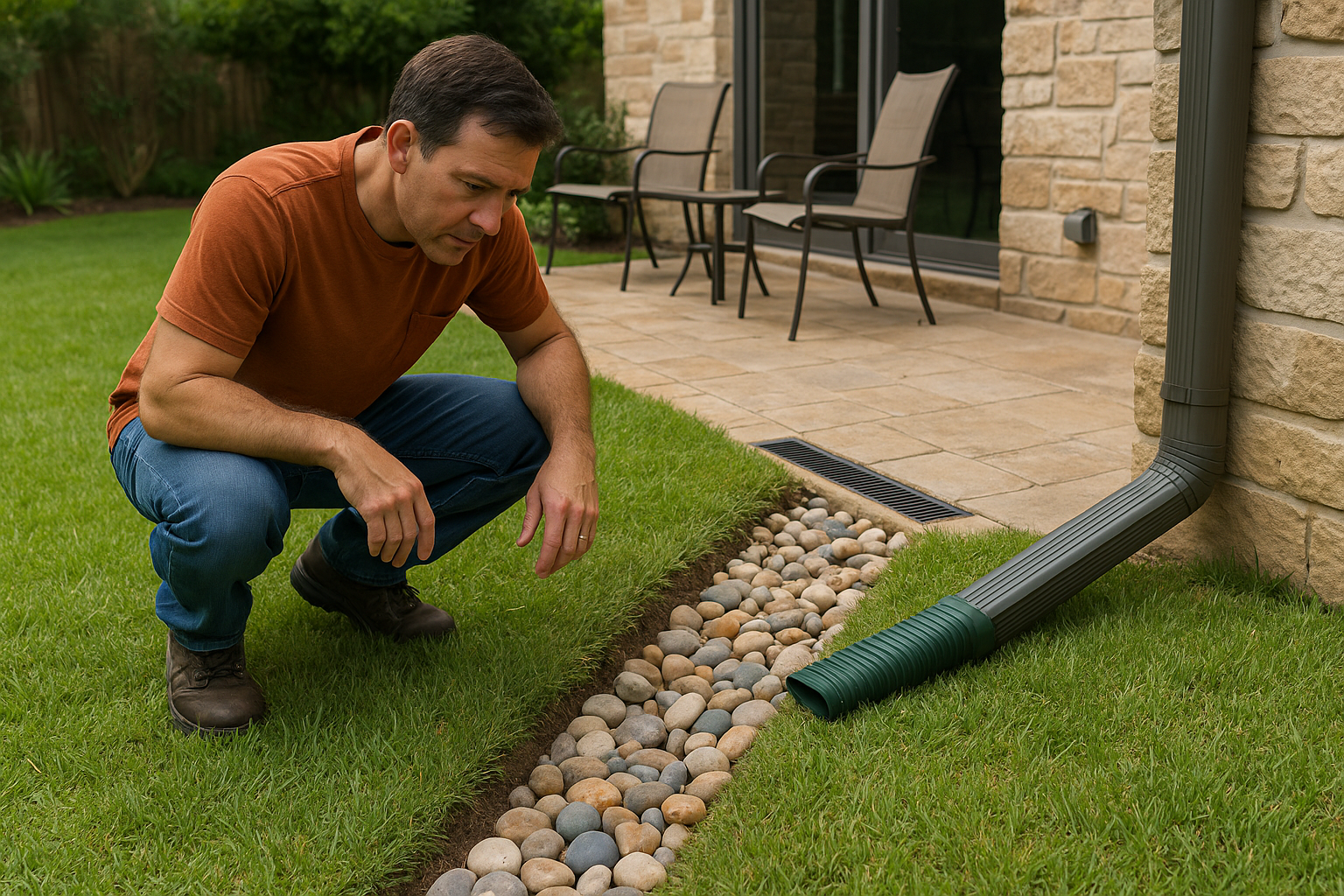
If water keeps finding its way toward your slab or pooling in the yard, you are right to compare a French drain with a trench or channel drain. The trick in Austin is knowing which tool solves the exact problem you see on the ground. This guide breaks down the difference between French drains and surface channel drains, when downspout extensions are enough, what to expect for costs, and how Central Texas soils and storms affect design and maintenance. If you want a fast answer, skip to the quick guide below, then come back for install tips, price ranges, and care so your system keeps working through our biggest rain events.
Quick guide: which drain should you pick?
Start with the simplest fixes. If roof runoff is spilling near your foundation, extend or bury your downspouts so water exits several feet away and keep gutters clean. That one change solves many problems for far less than any trench. For gutter and downspout best practices, see our local guide to preventing water damage and maintenance tips at Austin Hi Tech Prevent Water Damage.
Next, match the drain to the water source you see.
If fast runoff travels across concrete or asphalt and threatens your garage or front entry, a trench or channel drain across the paved edge collects that surface flow before it reaches the house. For driveway and garage use cases, see our Austin notes on surface drainage at Prevent Garage Water Damage.
If the lawn stays soggy, water stands near the foundation after storms, or you have seepage that feels like it comes from the soil itself, a French drain is the better match. A French drain is a gravel trench with a perforated pipe that collects subsurface water and carries it to a safe outlet. We walk through components and placement ideas at Stop Water Damage in Your Garage With These Easy Tips.
In Central Texas, many homes benefit from both systems. A channel drain handles fast surface flow at the driveway while a French drain lowers soil moisture in a problem spot. The sections below explain when to mix and match, how the clay around Austin changes the design, and what a reasonable budget looks like.
Downspouts first: fast, low cost protection
Before digging, check the roof runoff. Gutters that overflow or downspouts that dump water at a corner can undo any yard drain. A simple extension that gets water several feet away often removes the main source of pooling at the slab. Our maintenance guide shows what to look for and when to clean at Prevent Water Damage, and our clogged gutter article explains the hidden risks of roof overflow at Clogged Gutters: Hidden Risks and Solutions.
What distance works best for downspouts in Austin yards? Many homes do well with a discharge point at least 3 to 10 feet from the foundation, adjusted for lot slope, soil, and nearby hardscape. Above ground extensions and splash blocks are the quickest fix. Burying downspout lines to a pop up emitter, catch basin, or dry well gives a cleaner look and gets water where it can safely spread out.
Budget wise, basic extensions or splash blocks often cost a few dollars each at retail. If you want a contractor to bury each downspout to a small outlet, plan on a modest per downspout price in the low hundreds in typical yards. Current national price checks for downspout extensions and buried runs are summarized by HomeGuide. Actual Austin pricing depends on trench length, depth, and whether rock is present.
What a French drain does for an Austin yard
A French drain is designed to lower and redirect water that is moving through the soil. It is a gravel filled trench with a perforated pipe that collects subsurface water and carries it to a discharge point. That design helps when you see persistent puddles in a lawn, water sitting along the foundation after a storm, or seepage under a patio. We use this definition and common use cases in our article at Stop Water Damage in Your Garage With These Easy Tips.
Typical parts look like this. A trench is lined with a filter fabric to limit silt entry. Clean rock such as three quarter inch gravel is placed as a bed. A 4 inch perforated pipe sits within the gravel. More gravel surrounds and covers the pipe, then the fabric wraps over the top. Finish the surface with topsoil and sod for a lawn, or with decorative rock. The outlet must sit lower than the inlet so gravity helps the water move. Discharge options include daylighting on a downslope, a connection to a catch basin, or a dry well if you have no downhill path.
How deep should a yard French drain be? Many curtain drains fall between 8 and 24 inches deep for surface pooling problems. Deeper lines are used for footing related water or to intercept flows at the bottom of a slope. The right depth also depends on where you can discharge. If you do not have a lower exit point, a simple trench may not fix the problem and a sump or regrade may be better.
Soil matters in Austin. Blackland clay in our region swells when wet and shrinks during drought, which moves both slabs and buried pipes. Your backfill needs to be compacted evenly, bedding must stay stable, and you should avoid creating low spots near the foundation that hold water. We discuss this soil behavior and its impact on slabs at Austin Slab Leak Detection, Reroute and Repair. Good drainage around the home and more consistent moisture along the perimeter help limit stress on the slab.
What does it cost to add a French drain in a yard? Wider published ranges reflect soil, slope, pipe depth, and whether rock or a sump is involved. National price guides put many exterior French drains in the ten to sixty five dollars per linear foot range, with small yard projects from a few hundred dollars to several thousand. See current summaries at Modernize and Fixr. Austin bids often vary with access, depth needed for a good outlet, and whether you want the line under sod or gravel.
What a channel drain does at driveways and patios
A trench or channel drain is a surface inlet with a grate that sits flush with the top of concrete or pavers. Its job is to collect fast moving runoff across hard surfaces before water reaches doors, garage slabs, or foundation walls. That makes it a favorite along the edge of a driveway in front of a garage, between a patio and the back wall, or at any low point where paved surfaces meet the house. Our local examples and placement ideas are covered at Prevent Garage Water Damage.
Location and slope control how well a channel drain works. Set the channel at the low edge of the paved slope and aim the outlet toward a safe discharge or yard basin. In driveways, most installers set the channel drain in concrete for long term stability and match the grate to the expected load. A driveway carrying vehicle traffic needs a grate rated for that use. Pedestrian only areas can use lighter parts.
Price varies with the channel material, the grate class, trenching through concrete, and how long the run is. A simple channel across a small sidewalk is on the lower end while a heavy driveway system with concrete removal and replacement runs higher. For planning, current cost guides show installed pricing that commonly ranges from roughly one hundred twenty to three hundred fifty dollars per linear foot for light use to light vehicle projects, with premium materials and complex concrete work at the top. See load classes and installed examples at Extreme Epoxy Coatings Trench Drain Cost Guide.
How Central Texas soils and storms shape your choice
The Austin area sees heavy downpours followed by long dry spells. That pattern creates two separate drainage needs. You may need a surface system to quickly collect runoff on a driveway during a big storm and a subsurface system to move standing water out of a lawn after the soil is saturated. Many homeowners do both.
The clay around Austin swells when wet and tightens as it dries. That seasonal movement can stress your slab and also affects trenches and buried lines. A trench that is not compacted well can settle along the edge of the slab and hold water where you least want it. We cover slab and soil behavior in more detail at Austin Slab Leak Detection, Reroute and Repair. Good drainage design plus consistent moisture along the foundation helps reduce those swings in movement.
One more local note. High intensity storms push a lot of water across hardscape in a short time. Even if you have a French drain in the yard, a channel at the garage can still be the right addition because it handles a different problem. Think of French drains as the subsurface system that lowers wet soils and channel drains as the surface inlet that keeps water off the slab during a storm.
Grading and slope still matter
Many drainage complaints trace back to grade. If the soil around the foundation is flat or slopes toward the house, water will sit against the slab no matter how much pipe you install. A practical yard goal is about 6 inches of drop away from the home over the first 10 feet where space allows. Regrading often solves the issue or sets up a shorter drain that works better. For a how to on checking slope and reshaping low spots, see our local guidance at Grading Your Yard to Prevent Water Damage.
Install tips that work in Austin
Downspout fixes are the fastest to implement. Add extensions that move roof water several feet out into the yard and consider burying downspouts to an emitter or basin if you prefer a clean look. Clean gutters at least twice per year after the big leaf drops. A quick roof and gutter check after major storms helps you spot clogs before the next rain. Our maintenance guide is at Prevent Water Damage.
For channel drains, place the channel along the low edge of the paved area you want to protect, such as just outside the garage door. Lay the channel with a consistent fall toward the outlet and set it in concrete if it will see traffic. Choose a grate that matches use. Pedestrian areas can use lighter grates while driveways need heavier classes. Keep an eye on where the line discharges and consider a catch basin in the yard if you do not have a downhill daylight point.
For French drains, line the trench with a geotextile filter fabric, bed with clean rock, and use a 4 inch perforated pipe for most yard applications. Backfill with more clean gravel and fold the fabric over to help limit fines. Finish with topsoil and sod or a layer of rock. The trench must have a steady slope to an outlet that is lower than the start. In our expansive clays, use well compacted backfill above the drain and avoid digging tight to the foundation unless a pro has evaluated footing depth and slab conditions. More details are available in our article at Stop Water Damage in Your Garage With These Easy Tips.
What to budget in Central Texas
French drains
Exterior yard French drains often fall between ten and sixty five dollars per linear foot in national guides, with smaller projects landing between five hundred and six thousand five hundred dollars depending on length, depth, and discharge. Expect higher bids for rock excavation, deep outlets, or when a sump is required. For current national ranges and what drives price changes, see Modernize and Fixr.
Channel drains
Installed pricing for light duty channel drain systems commonly runs from about one hundred twenty to three hundred fifty dollars per linear foot, with driveway rated materials and concrete work toward the upper end. Length, grate class, demolition and pour back, and the outlet line all influence the final number. See installed examples and load classes at Extreme Epoxy Coatings.
Downspout extensions
Simple above ground extensions and splash blocks are inexpensive and can be installed quickly. If you prefer a buried line to a pop up emitter or small basin, plan on a modest per downspout cost. National price checks and common options are summarized by HomeGuide. Austin projects vary with trench length, roots, and whether the line crosses a sidewalk or driveway.
Every Austin yard is a little different. Soil type, access for equipment, existing concrete, and the distance to a safe outlet are the big drivers. Use the ranges above as a planning guide, then get a site specific quote so you are not surprised by hidden rock or utility conflicts.
Maintenance that keeps drains working
Gutters and downspouts come first. Clean them twice a year and inspect after major storms. Leaves and roof grit can block outlets or overwhelm a downspout elbow. Our maintenance guide walks through simple checks at Prevent Water Damage, and our clogged gutter article explains why roof overflow near the slab is such a risk at Clogged Gutters: Hidden Risks and Solutions.
Channel drains need clear grates. Sweep debris off the surface and rinse the channel after storms. If your driveway sees vehicles, look for bent or damaged grates and replace with the correct load class if needed. Keep the outlet point free so water can exit the line without backing up.
French drains work quietly underground, but they still need checks at the outlet. Make sure daylight points are open and that catch basins are not silted in. Filter fabric and clean gravel help slow silt entry, but some clogging can occur over time. If you notice reduced performance, a flush at the outlet or cleaning the terminal basin can restore flow.
After a big Central Texas rain, walk the yard. Look for new low spots, soil settlement along trenches, or water that now escapes a new path. Tree roots can change grades and even invade shallow lines over the years, so keep an eye on areas near large trees.
DIY or call a pro
Handy homeowners can handle short downspout extensions, basic gutter cleaning, and small curtain drains in open lawn areas. If you go that route, take time to set a consistent slope in the trench and protect the pipe with clean gravel and a filter fabric wrap. Avoid digging too close to your foundation or footings without understanding depth and soil conditions.
Call a pro if the problem reaches the slab, garage floor, or basement, if you are in very expansive clay, or if the outlet needs to cross other utilities or tie into a storm system. Proper slope, stable bedding in clay, and safe routing around buried lines matter for long term performance and safety. Our team can evaluate your site and recommend a plan that addresses both surface and subsurface water if needed. Reach out through our contact page to schedule an on site evaluation at Austin Hi Tech Contact.
Two quick Austin case examples
Driveway runoff at a garage. A West Austin home had a driveway sloped toward the garage. During heavy storms, water ran straight to the slab and under the door. The fix added a channel drain just outside the garage door, set in concrete with a vehicle rated grate, and piped the outlet to a side yard basin. The owner also added downspout extensions that moved roof water away from the same low point. When the next storm hit, the channel collected the sheet flow and the garage stayed dry. Installed costs for setups like this commonly match the channel drain ranges above, with concrete removal and pour back being the biggest line items. See surface drainage placement ideas in our garage article at Prevent Garage Water Damage and load classes at Extreme Epoxy Coatings.
Soggy backyard near a slab. A Central Austin home had standing water along the back wall after most storms. The yard was flat, and the clay soil drained slowly. A French drain was installed parallel to the foundation, placed out in the yard a safe distance from the footings, and sloped to daylight at a side swale. The crew regraded the first few feet away from the house to regain positive slope and extended two downspouts to the side yard. After the next storm cycle, the line lowered soil moisture and the regrade kept water from sitting at the slab. Project size and soil drove price into the mid range of the national French drain numbers cited above. Learn how a French drain collects subsurface water at Stop Water Damage in Your Garage With These Easy Tips, and see French drain cost ranges at Modernize.
Start here checklist
Use this short list to triage water problems before you dig. Each step links to a practical how to or local guidance.
- Are gutters clean and flowing? See Prevent Water Damage.
- Do downspouts discharge several feet away on a slope that moves water out and away? See Downspout tips.
- Does soil around the foundation drop over the first few feet? See Grading Your Yard.
- Is the problem fast surface water at a driveway or patio, or soggy soil that lingers? Pick a channel drain for the first, a French drain for the second, or both if you face both.
FAQ
What is the difference between a French drain and a channel drain?
A French drain is a gravel trench with a perforated pipe that collects water moving through the soil and routes it to an outlet. A channel drain is a surface inlet with a grate that sits in pavement to collect fast runoff before it reaches a door, garage, or wall. See our local use cases at French drain overview and Channel drain overview.
Do I need both a French drain and a channel drain?
Sometimes yes. If you have fast sheet flow on a driveway and soggy soil along the slab, each system tackles a different source. Channel drains handle surface flow across hardscape. French drains lower soil moisture in a problem area. Central Texas storms often call for both in the same yard.
How far should downspouts discharge from the foundation?
Many homes do well when roof water is moved 3 to 10 feet away from the foundation, adjusted for slope and soil. Extensions or buried downspout lines are simple ways to do that. See guidance and maintenance tips at Prevent Water Damage.
Can I place a French drain right next to my foundation?
Only after a careful review. In expansive clay, a trench tight to the foundation can hold water or weaken support if built incorrectly. Many yard fixes place a French drain several feet out in the soil, combined with improved grading near the wall. Get a professional assessment before digging near footings, especially with older slabs or known movement.
How deep should a French drain be in a yard?
Many curtain drains that fix lawn pooling sit roughly 8 to 24 inches deep, but depth should match the water source and the available outlet. Deeper lines are used to intercept flows at the bottom of a slope or when addressing footing seepage. The outlet must be lower than the inlet so gravity does the work.
What does maintenance look like for a channel drain?
Keep the grate free of leaves and sediment, rinse the channel after storms, and make sure the outlet flows. If the grate sits in a driveway, use a load rated replacement if any parts are damaged. See more surface drainage notes in our garage water article at Prevent Garage Water Damage.
Will a French drain fix my whole yard if flooding comes from the street?
Probably not by itself. A French drain lowers soil moisture and moves groundwater. If street runoff or curb overflow is the main source, you may need regrading, raised borders, or a coordinated surface system. A site visit will clarify what mix of solutions fits your lot and city rules.
Austin French drain vs channel drain: the short answer
Use a channel drain at driveways, garage faces, and paved areas when fast surface water is the problem. Use a French drain in lawns and near foundations when water sits in the soil after storms or seeps toward the slab. Start with gutter cleaning and downspout extensions to keep roof water away from the house. Adjust grade around the foundation so water flows out and down. Keep Austin soils and storms in mind, and do not be afraid to mix systems when you need both surface and subsurface control.
If you want a site specific recommendation and a firm price for your Central Texas yard drainage solutions, our team is ready to help. Schedule a free on site evaluation through Austin Hi Tech Contact. We will look at the way your lot handles water, check grading and soil, and recommend the right combination of downspout fixes, French drains, and channel drains to protect your home.